Messi and Ronaldo Re-enter Spanish Football as Club Owners
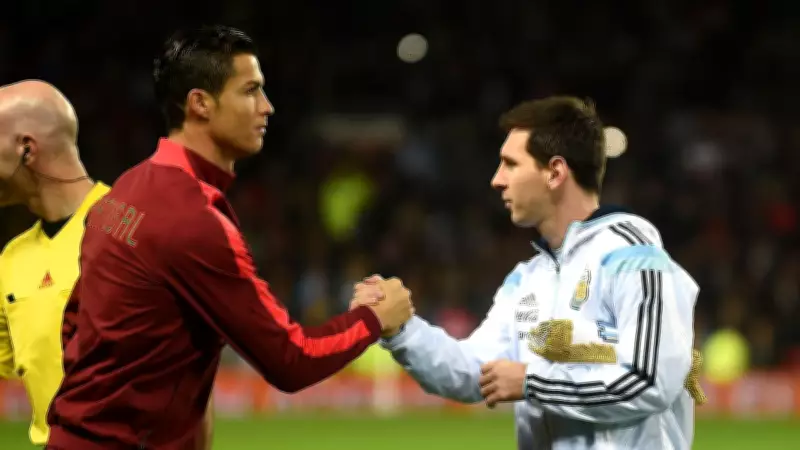
For the first time since their departures from Spain, Lionel Messi and Cristiano Ronaldo have made a notable return to Spanish football, not as players but as club owners. This development places them on different tiers of the same league system, opening up the possibility that their paths could intersect again once their illustrious playing careers conclude.
Current Playing Careers and Strategic Moves
Currently, Messi and Ronaldo are geographically distant on the pitch. Messi is competing in Major League Soccer with Inter Miami, while Ronaldo is playing in the Saudi Pro League with Al-Nassr. Both are in the latter stages of careers that once ran parallel in La Liga. This separation highlights why their recent ownership moves have garnered significant attention, as they subtly reintegrate the duo into the football structure where their legendary rivalry was originally forged.
Messi Takes Full Control of UE Cornellà
Lionel Messi has acquired full ownership of UE Cornellà, a fifth-tier club located near Barcelona in Catalonia. By purchasing a 100 percent stake, Messi returns to a region that played a pivotal role in defining his career. The club officially confirmed the deal, stating, "eight-time Ballon d'Or winner Leo Messi has formalised the acquisition of the club." They outlined the project's direction, describing it as "the beginning of a new chapter in the club’s history" with a focus on growth, stability, and investment in talent, guided by a long-term vision and strong local roots.

Cornellà competes in the Tercera Federación and operates on a modest scale, featuring a 1,500-capacity stadium. However, the club boasts a recognized academy that has produced players such as David Raya and Jordi Alba. At 38 years old, Messi continues to play for Inter Miami under a contract until 2028, but this ownership move provides him with a direct role in Spanish football beyond his active playing days.
Ronaldo Invests in UD Almería
Cristiano Ronaldo's involvement comes at a higher competitive level. In February, through his CR7 Sports Investments company, he acquired a 25 percent stake in UD Almería, a club competing near the top of the Segunda División. Ronaldo expressed his ambition, saying, "I have long had the ambition to contribute to football beyond the pitch." Almería is currently in the top three of the league and remains firmly in the promotion race, sitting just two points behind leaders Racing Santander after 27 matches. Relegated from La Liga in 2024, the club is pushing for a swift return to the top division.
Divisions Apart but Within the Same System
There is a clear gap between the two clubs at present. UE Cornellà is in the fifth tier, focusing on upward mobility, while UD Almería is on the verge of returning to La Liga. This gap could widen if Almería secures promotion this season. Nevertheless, both clubs are now part of the same promotion and relegation structure in Spanish football, where movement between divisions is constant. This framework keeps the possibility of a future encounter alive, even if it is several years away rather than immediate.
Messi's involvement is tied to a long-term development project at a lower level, whereas Ronaldo's investment is connected to a team already positioned near the top of the hierarchy.
From El Clásico to Ownership: A Lasting Connection
Although Messi and Ronaldo are still active players, both have taken strategic steps that extend beyond their time on the pitch. For fans who closely followed their intense rivalry in Spain, the idea of them being linked again, even in this different capacity, holds considerable interest. They are no longer facing each other weekly, and their careers have diverged geographically, but through these ownership moves, both have re-entered the same football landscape where their rivalry once thrived. This time, their names are attached to clubs rather than teams built around them, marking a new era in their enduring connection.