Daryl Mitchell's Batting Prowess Revives ODI Specialist Debate
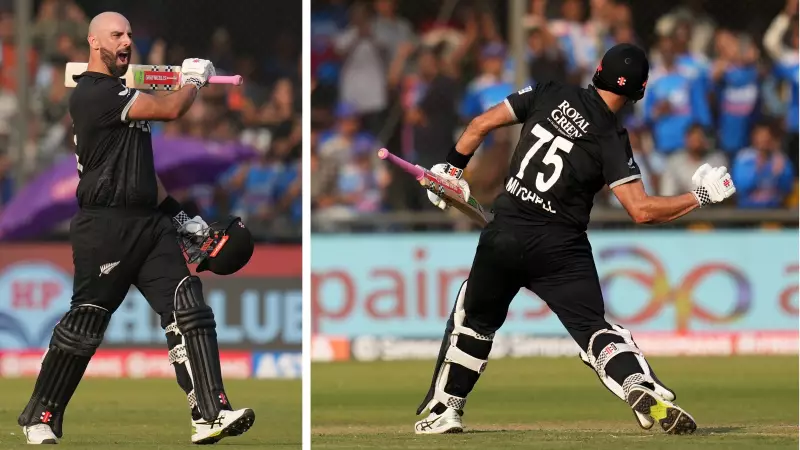
Daryl Mitchell delivered another commanding performance against India in the third ODI at Indore. His brilliant century proved that the traditional 50-over batting specialist remains relevant in modern cricket.
Consistent Dominance Against India
Mitchell scored 137 runs from just 131 balls during Sunday's match. This remarkable innings took his series total to an impressive 352 runs. The New Zealand middle-order batsman has developed a particular fondness for facing Indian bowling attacks.
His statistics against India tell a compelling story. Mitchell has now accumulated 741 runs in 11 ODI innings against the Men in Blue. He maintains an extraordinary average of 74.1 when playing against India. Six of his last seven innings against this opponent have produced scores exceeding fifty runs.

The right-handed batsman registered his ninth ODI century during the Indore match. This achievement boosted his career average to nearly 60 across 59 ODI appearances. Mitchell's consistent performances establish him as a genuine limited-overs specialist.
Mastering Spin and Building Partnerships
Mitchell displayed exceptional skill against both spin and pace bowling. He entered the crease during the second over with New Zealand struggling at 5/2. The batsman showed remarkable composure to rebuild the innings under pressure.
His technique against spin bowling proved particularly effective. Mitchell employed sweeps and reverse sweeps with confidence. He demonstrated quick footwork to attack the spinners effectively. This approach forced Indian captain Shubman Gill to delay introducing his spin options.
The New Zealand batsman formed crucial partnerships that stabilized the innings. His 219-run stand with Glenn Phillips proved instrumental in setting a competitive total. Both batsmen accelerated at the right moments, putting pressure on India's bowling attack.
The Enduring Value of ODI Specialists
Mitchell's performance challenges the notion that ODI specialists are becoming obsolete. While the format receives less attention in today's cricket landscape, his success demonstrates that specialized skills still matter. He represents a breed of batsmen who combine conventional strokeplay with calculated aggression.
This template has been perfected by Indian legends Virat Kohli and Rohit Sharma over many years. Mitchell shows that other batsmen can follow this path successfully. His ability to pace innings and manipulate field placements reflects deep understanding of the 50-over game.
The New Zealander has not achieved similar success in Test or T20 cricket. This specialization has kept him somewhat under the radar internationally. However, his consistent performances against quality opposition demand recognition.
India's Bowling Response
India's bowling attack experienced mixed fortunes during the match. Arshdeep Singh made an immediate impact by dismissing Henry Nicholls early. Harshit Rana followed with another breakthrough in the powerplay overs.
However, the Indian bowlers struggled to maintain pressure as the ball aged. Mohammed Siraj delivered the most consistent performance among the pace bowlers. Nitish Reddy faced particular punishment during the latter stages of the innings.
The Indian team ultimately restricted New Zealand to 337/8 in their 50 overs. While this represented a challenging target, the bowling performance revealed areas for improvement. The team will analyze their strategies ahead of future encounters.
Mitchell's outstanding century serves as a reminder that ODI batting specialists continue to thrive. His mastery of the format provides a blueprint for aspiring limited-overs batsmen worldwide.