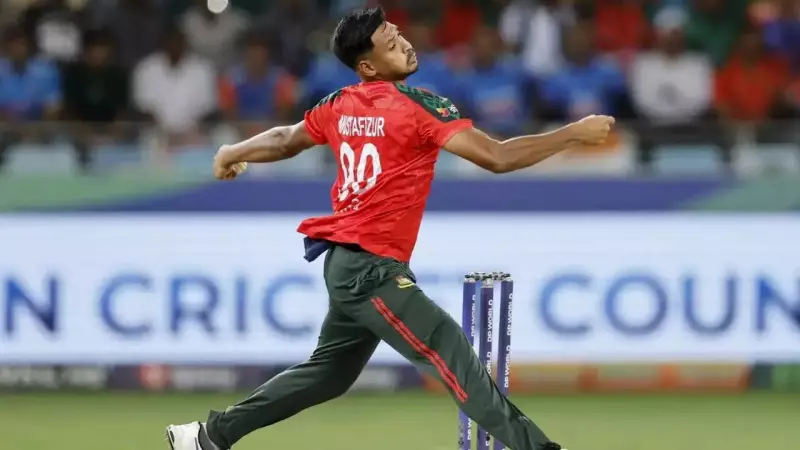
The release of Bangladesh fast bowler Mustafizur Rahman from the Kolkata Knight Riders (KKR) squad for the upcoming Indian Premier League (IPL) 2026 season has ignited a significant diplomatic and sporting conflict between the cricket boards of India and Bangladesh. The move, which came after the player was bought for a substantial sum of Rs 9.20 crore at last month's auction, has led to a series of retaliatory actions and public denials, straining relations between the two neighboring cricketing nations.
The Spark: A Costly Release and a Board's Ire
The controversy began when the Kolkata Knight Riders decided to release Mustafizur Rahman from their squad. This decision did not sit well with the Bangladesh Cricket Board (BCB), which viewed the move as disruptive so soon after a high-profile auction. The situation quickly escalated beyond a simple franchise decision, evolving into an inter-board confrontation.
In the days that followed, speculation swirled on social media that the Board of Control for Cricket in India (BCCI) was considering a reversal of the release decision to ease tensions. However, BCB President Aminul Islam Bulbul firmly denied these claims. Speaking to the Bangladeshi publication Ajker Patrika, Bulbul stated, "I have not had any written or verbal discussions (with the BCCI) regarding Mustafizur's (return to the IPL). I have not spoken to anyone from my board about this. There is no truth to this news."

Reports have suggested that the instruction to release Mustafizur came from the top level of the BCCI, potentially without full consultation with all senior officials, adding another layer of complexity to the unfolding drama.
Escalation: Telecast Ban and World Cup Threat
The fallout from Mustafizur's exit has been severe and multi-faceted. The BCB has taken two major retaliatory steps that directly impact Indian cricket. Firstly, Bangladesh has stopped the telecast of IPL matches within its borders until further notice, depriving the league of a substantial viewership market.
Secondly, and more consequentially, the BCB has informed the International Cricket Council (ICC) that it will not travel to India for the T20 World Cup 2026, citing security concerns. Bangladesh has formally requested that its matches be shifted to the tournament's co-host, Sri Lanka. The mega event is scheduled to begin on February 7, 2026.
Bangladesh's initial schedule includes four matches in the tournament: three in Kolkata and one in Mumbai. As of now, the ICC has not indicated any plans to relocate these fixtures from Kolkata and Mumbai to Colombo, Sri Lanka, setting up a potential standoff as the event draws closer.
Broader Implications and Unclear Resolution
This dispute marks a significant low in BCCI-BCB relations, impacting not just a domestic T20 league but also a global ICC event. The refusal to play World Cup matches in India, if upheld, would be an unprecedented move in modern cricket diplomacy. The cited security concerns add a serious dimension to what began as a player-contract issue.
The core of the conflict appears to be a clash of authority and protocol. The BCB's strong reaction suggests it perceives the late release of its premier pacer as a sign of disrespect or a breach of understood norms between boards regarding player management. With the BCB president publicly denying any backchannel talks for a resolution, and the ICC yet to act on the venue change request, the path forward remains uncertain.
The coming weeks will be critical in determining whether this dispute can be contained or if it will lead to a lasting schism, affecting bilateral cricket ties and the smooth execution of the T20 World Cup. All eyes are now on the negotiation tables of the BCCI, BCB, and the ICC.