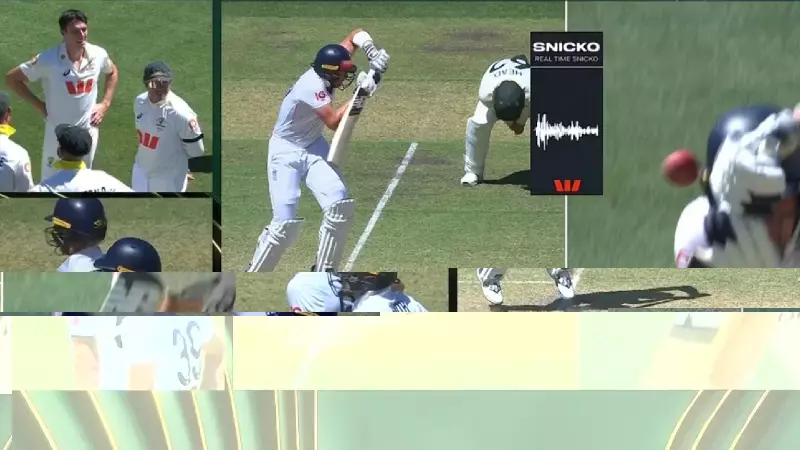
The third Ashes Test in Adelaide has been plunged into a major technology controversy, with the Snickometer system becoming the central talking point after a series of contentious decisions. Former England captain and respected commentator Nasser Hussain has voiced the frustration of many, stating that everyone has lost faith with the system following two incidents involving England's Jamie Smith on the second day of the match.
The 'Farcical' Incidents Involving Jamie Smith
The drama unfolded on Thursday, December 18, 2025, during the second day's play at the Adelaide Oval. The Snicko system, a key component of the Decision Review System (DRS), was at the heart of two pivotal moments. First, England batsman Jamie Smith appeared to glove a delivery from an Australian bowler to the slip cordon. While the on-field umpires referred the decision to check the cleanliness of the catch, the third umpire overturned the soft signal, ruling Smith not out because the Snicko spike was not perfectly aligned with the ball passing the glove.
Just two overs later, Smith was given out caught behind off a pull shot. This time, Snicko showed a spike as the ball passed the bat, leading to his dismissal. However, replays suggested the ball had missed the bat by a significant distance, leaving Smith and England captain Ben Stokes in utter disbelief. Hussain described the sequence of events as farcical.

Hussain's Scathing Critique of the Technology
Speaking to Sky Sports, Nasser Hussain did not hold back in his assessment. He was quick to clarify that England's precarious position in the series, being 2-0 down, was not due to technology alone. England are not losing the Ashes because of the Snicko, he stated. However, he emphasised the broader crisis of confidence it has created.
Everyone out here has lost faith in Snicko, Hussain declared. He revealed that the frustration was palpable on the field, with Australian players heard on the stump microphone calling the system a joke and terrible. He warned that the situation was entering dangerous territory, with third umpires now guessing based on unreliable data.
Hussain contrasted cricket's generally positive history with technology to the current mess, noting it was not like the ongoing VAR controversies in football. Cricket and technology and the DRS system has worked. But it's not working in this series, he concluded, stressing that the criticism was not one-sided but reflected poor decisions affecting both teams.
A Series of Controversies and the Path Forward
The incidents involving Smith were not isolated. On the first day of the same Test, Australia's Alex Carey was given a reprieve by the Snicko system, a decision that allowed him to score a century. Australian fast bowler Mitchell Starc had also lashed out at the technology, calling for it to be sacked and labelling it the worst technology.
The back-to-back controversies have cast a shadow over the prestigious series, raising serious questions about the reliability of the tools designed to eliminate umpiring errors. With the Ashes on the line, the International Cricket Council (ICC) and the technology providers face mounting pressure to review and rectify the issues with the Snicko system before confidence in the sport's adjudication process is irreparably damaged.