Controversial Dismissal Mars Pakistan's T20I Whitewash of Australia
NEW DELHI: A contentious moment during Australia's recent T20I series loss to Pakistan has ignited widespread anger among cricket enthusiasts worldwide. The controversy emerged after television replays clearly revealed a significant breach of cricket rules that went completely unnoticed by the on-field umpires during the match.
Pakistan's Dominant Victory Overshadowed by Controversy
Pakistan secured a comprehensive 111-run victory in the third and final T20I match, completing a commanding 3-0 series whitewash against Australia. However, the post-match discussion quickly shifted away from Pakistan's dominant performance to focus on a highly controversial dismissal involving Australian batter Cooper Connolly.
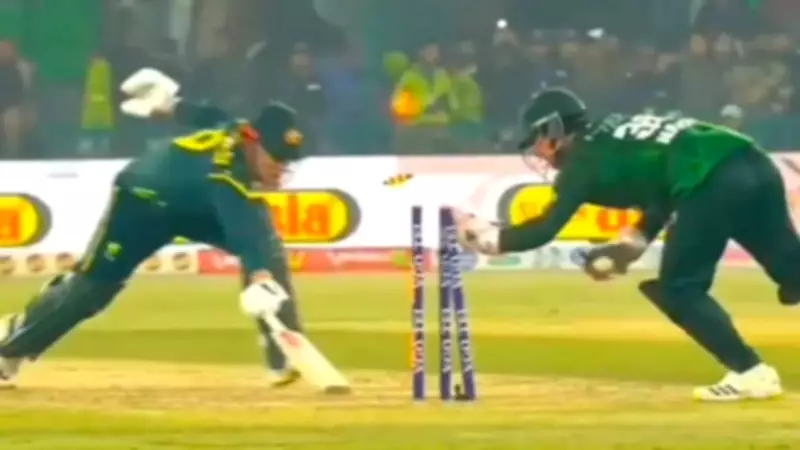
The young Australian cricketer was dismissed for a duck while attempting to return to his crease, appearing to be stumped by Pakistan wicketkeeper Khawaja Nafay. At first glance, the dismissal seemed straightforward, and the on-field umpire promptly gave Connolly out without consulting the third umpire or reviewing the decision.

Slow-Motion Replays Reveal Clear Rule Violation
Detailed slow-motion replays later exposed that Connolly had been unfairly dismissed due to a clear violation of cricket regulations. The footage unmistakably showed that wicketkeeper Khawaja Nafay broke the stumps using his left glove while the cricket ball remained firmly in his right hand throughout the action.
This action directly contravenes established cricket laws that govern legitimate dismissals. According to the International Cricket Council's regulations, a wicketkeeper can only legally remove the bails using the hand or glove that is actually holding the cricket ball at that precise moment.
ICC Rules Clearly Define Fair Dismissal Procedures
The ICC playing conditions provide explicit guidance on this matter through Clause 29.2.1, which states: "The wicket is broken fairly if a bail is completely removed from the top of the stumps or a stump is struck out of the ground – by a fielder with his hand or arm, providing that the ball is held in the hand or hands so used, or in the hand of the arm so used."
In this particular incident, the ball was never transferred from Nafay's right hand to his left before he broke the stumps, making the dismissal technically invalid according to cricket's governing laws.
Sportsmanship and Umpiring Standards Questioned
Despite the clear rule violation visible in replays, Khawaja Nafay did not acknowledge the mistake and continued with his appeal, which apparently convinced the umpire that the dismissal was completely legal. Cricket fans worldwide expressed astonishment that such a significant error escaped detection in real time and was not reviewed through available technological means.
The incident has drawn substantial criticism across social media platforms and cricket forums, with numerous observers questioning why the appeal wasn't voluntarily withdrawn by the Pakistani team, especially considering their commanding position in the match.
Broader Implications for Cricket Integrity
While the match result would have remained unchanged regardless of this particular dismissal, the controversy has raised serious concerns about sportsmanship standards and umpiring quality just ahead of major international tournaments. Many cricket analysts have highlighted how such incidents could potentially influence crucial matches in future competitions.
The debate has extended beyond this specific match to encompass broader discussions about:
- The effectiveness of current umpiring protocols
- The role of technology in decision-making processes
- Ethical responsibilities of players in acknowledging mistakes
- The importance of maintaining cricket's spirit alongside its technical rules
This controversy serves as a reminder of how critical moments in cricket can spark important conversations about the game's integrity, the implementation of rules, and the balance between competitive spirit and fair play in international sports.