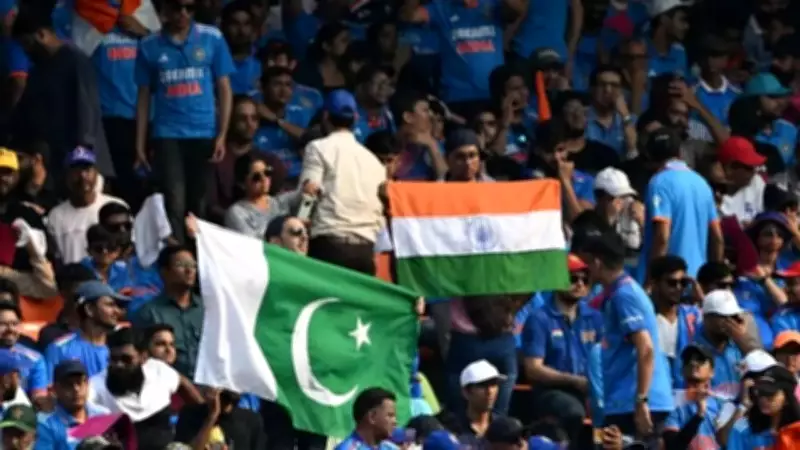
The cricketing world finds itself embroiled in yet another political storm as Pakistan's decision to boycott its match against arch-rival India at the upcoming ICC Men's T20 World Cup 2026 has brought the uncomfortable intersection of sports and diplomacy sharply into focus. This selective refusal to play, despite government clearance for the rest of the tournament, threatens to undermine the very fabric of international cricket competitions.
A Deliberate Snub with Official Backing
In a move that has sent shockwaves through the cricketing community, the Pakistani government issued an official release stating, "The government of Pakistan grants approval to the Pakistan cricket team to participate in the Twenty20 World Cup, however, the Pakistan team shall not take the field in the match scheduled on 15th February against India." This announcement came following high-level consultations between Pakistan Cricket Board (PCB) chairman Mohsin Naqvi and Prime Minister Nawaz Sharif in Lahore, indicating this is a calculated political stance rather than a spontaneous sporting decision.
While Pakistan's squad prepares to travel to Colombo to begin their campaign, ending speculation about their overall participation, their targeted boycott of just the India match represents a significant escalation in bilateral cricket tensions. This comes against the backdrop of Bangladesh's removal from the tournament after their venue-shift demands were rejected by the ICC, highlighting the governing body's firm stance on tournament integrity.

ICC's Stern Warning and Historical Echoes
The International Cricket Council has responded with unusual firmness, stating that Pakistan's position "is difficult to reconcile with the fundamental premise of a global sporting event" and warning that such actions undermine sporting integrity, competitiveness, consistency and fairness. The ICC has cautioned about potential long-term consequences for Pakistani cricket and urged the PCB to seek a "mutually acceptable resolution," though prospects appear dim given the government's direct involvement.
Historical Precedents of Tournament Boycotts
This current controversy is far from unprecedented in ICC history, with several notable instances where teams have forfeited matches during global tournaments:
- 1996 ODI World Cup: Australia and West Indies refused to travel to Colombo due to security concerns following a bomb blast, forfeiting their matches. Ironically, Sri Lanka rode the momentum to a historic World Cup victory.
- 2003 ICC ODI World Cup: England boycotted their match in Zimbabwe due to political opposition to Robert Mugabe's regime, while New Zealand declined to play in Kenya after a bombing incident. Both teams forfeited points, with Kenya making a stunning semi-final run as beneficiaries.
- 2025 ICC Champions Trophy: India refused to travel to Pakistan, leading to a neutral-venue compromise that now underpins current ICC arrangements. India went on to win that tournament in Dubai.
Practical Implications for the 2026 Tournament
The current standoff creates complex logistical and sporting challenges for the T20 World Cup 2026. According to ICC playing conditions, a walkover is not automatic simply because a team declares it will not play. The match is only officially forfeited if one side fails to present itself at the venue at the scheduled time for the toss. Until that moment, the fixture remains active.
This means India must follow all match-day protocols meticulously, with captain Suryakumar Yadav expected to arrive on time and walk out for the toss as scheduled. Only if Pakistan's team fails to appear will the match referee formally award India a walkover, granting them two crucial group points. This procedural requirement adds another layer of tension to what is already a highly charged situation.
The Broader Impact on Cricket's Future
Pakistan's refusal to play India even at a neutral venue in Colombo represents a significant hardening of positions compared to previous compromises. The 2025 Champions Trophy established a precedent where political differences were managed through neutral venues, but the current boycott suggests that model may be breaking down.

This incident raises fundamental questions about whether global cricket tournaments can remain insulated from geopolitical tensions. As the ICC grapples with this latest challenge, the cricketing world watches anxiously, aware that the outcome could set important precedents for how political boycotts are handled in future international competitions. The integrity of the sport as a unifying force hangs in the balance as administrators navigate these treacherous diplomatic waters.