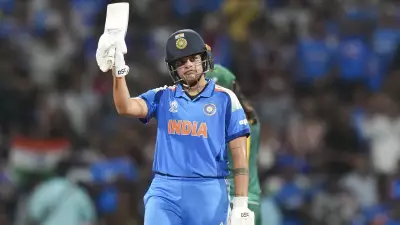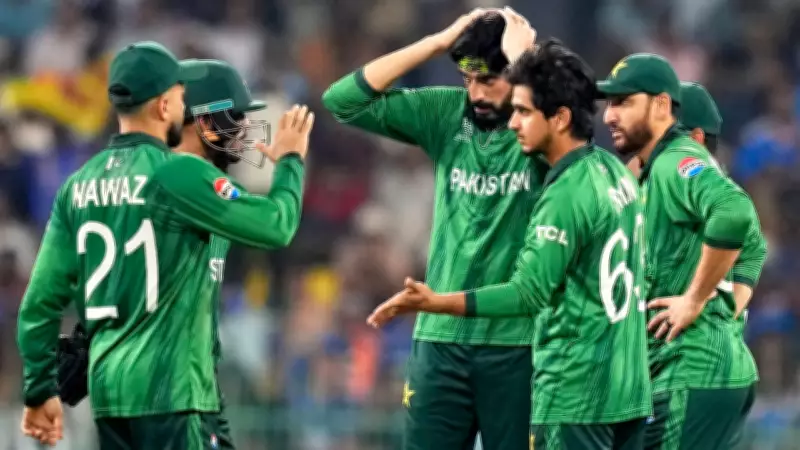
Pakistan Cricket Team Shows Relaxed Mood After India Defeat
In Colombo, a day after suffering a humiliating 61-run loss to India, the Pakistan cricket team displayed a notably upbeat and relaxed atmosphere during their training session at the Sinhalese Sports Club (SSC) Ground. This light practice, which included a football game, stood in stark contrast to the intense and serious net sessions observed before the high-pressure match against India.
Pressure from PCB Chairman Mohsin Naqvi
The presence of Pakistan Cricket Board (PCB) chairman Mohsin Naqvi, who also serves as the interior minister in the Shehbaz Sharif cabinet, has been a topic of discussion. Naqvi hosted the team for dinner on the eve of the India match and breakfast on match day, but left the stadium early after Pakistan lost their sixth wicket. Similar interactions occurred during the Asia Cup, raising questions about whether his visits add extra pressure on the players.
Pakistan coach Mike Hesson defended Naqvi's involvement, stating, "The chairman is a big supporter of ours and he comes along all the time and before games. I don't think it adds extra pressure. That's part of his role. Our guys know we are representing Pakistan." However, with fewer cameras around during the Namibia preparation, players seemed more at ease, highlighting the potential stress from such high-profile visits.

Chronic Lack of Role Clarity in Pakistan Squad
Pakistan's struggles against India are often attributed to temperament or selection issues, but a deeper analysis reveals a persistent lack of role clarity within the team. Over the last four T20 World Cup editions, Pakistan has used 29 players, the highest among Full Member nations, indicating excessive experimentation.
Take the example of Babar Azam. In the loss to India, poor bowling execution and a top-order collapse were key factors, yet Babar's placement at No. 4 exemplifies a flawed strategy. Historically, Babar has shown limitations with a modest strike rate and difficulty accelerating against spin, making his move to the middle order questionable. Evidence supporting this shift largely comes from performances against weaker opposition, not in high-stakes matches.
Confusion in Bowling Strategy and All-Rounder Overload
The bowling unit faces similar confusion. Pakistan has overloaded their lineup with all-rounders, seemingly to cover various scenarios without a clear plan. Against India, they fielded eight bowling options, but only three—Shaheen Afridi, Abrar Ahmed, and Usman Tariq—were primarily selected for their bowling. One bowler delivered just two overs, and another was introduced late, showing a heavy reliance on part-timers.
Faheem Ashraf's role highlights this muddle. He has not bowled a single over in the tournament and only four overs in his last eight T20Is. Batting at No. 8 suggests limited trust in his batting, restricting him to a brief window of opportunity. This strategy of packing the team with spin options backfired when Shaheen had an off day, leaving no backup plan. Pakistan ended up bowling 18 overs of spin, a record in T20 World Cup history, using six spinners in a single match.
Net Sessions Reveal Team Dynamics and Pressure Points
Observing Pakistan at the nets offers insights into their dynamics. In a relaxed setting, Naseem Shah bowled a fierce yorker to Saim Ayub, joking about playing similar deliveries in matches. Shadab Khan, who conceded 17 runs in his only over against India, focused on refining his lengths with Saim. Sahibzada Farhan appeared comfortable, instructing bowlers and executing pulls and hooks with ease.
Babar Azam, though not the current captain, remains a influential figure in the dressing room, often addressed as "skipper" by teammates like Shadab Khan and Abrar Ahmed. He shared inputs with bowlers but showed discomfort during power-hitting drills, requiring reassurance from coach Mike Hesson. After the session, Babar left visibly upset, indicating the mounting pressure on him.

Mounting Pressure on Senior Players Babar and Shaheen
The pressure is intensifying on senior pros Babar Azam and Shaheen Shah Afridi. Babar has not hit a six against a Full Member team in T20 World Cups since the 2021 win over India. His recent Big Bash League performance was underwhelming, with 202 runs in 11 innings at a strike rate of 103.06, leading to his temporary drop from the T20I side.
Shaheen, once a formidable force, has become predictable. During net sessions, he barely bowled, instead focusing on batting and practicing left-arm wrist spin. This raises speculation about his inclusion in the upcoming match against Namibia. Usman Tariq defended both players, saying, "One game doesn't define their capability or calibre. There's no doubt that Shaheen and Babar have won many matches for Pakistan. If something like this happens, they know how to recover because they are senior players."
Conclusion: Need for Clarity and Defined Roles
Until Pakistan addresses its confusion between flexibility and indecision, teams like India will continue to exploit their weaknesses. Talent has never been the issue for Pakistan; rather, it's the lack of clear roles and trust in players. Without defined strategies, Pakistan risks arriving at World Cups with theoretical options but practical uncertainty on the field. The upcoming must-win game against Namibia is crucial, as a victory would secure a spot in the Super Eight, while a loss would send them home early.