Rain and DLS Method Combine to Deny Melbourne Stars Crucial Power Surge in BBL Knockout
The Melbourne Stars endured a heartbreaking three-run defeat against the Hobart Hurricanes in the Big Bash League knockout match, with weather conditions and the Duckworth-Lewis Stern method playing a decisive role in the outcome. The match, which was significantly affected by rain, saw the Stars denied their allocated Power Surge over, a factor that ultimately contributed to their narrow loss.
Match Interrupted by Persistent Rain
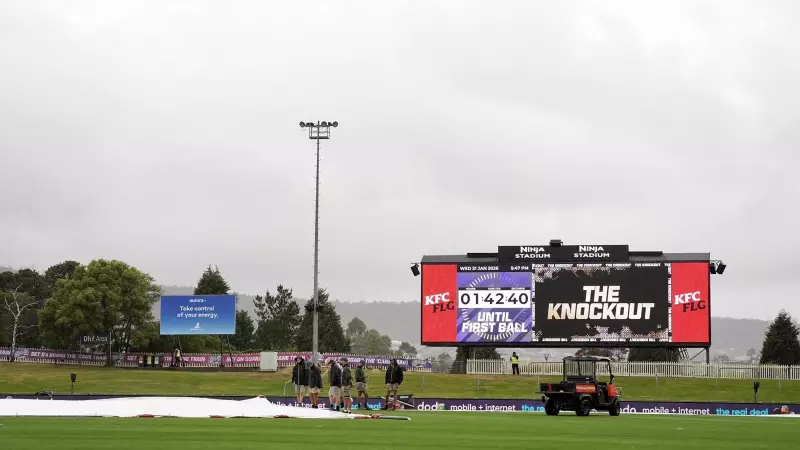
In a rain-curtailed encounter, the Hobart Hurricanes batted first and posted a total of 114 for 5 in their allotted ten overs. The Hurricanes managed to utilize their one-over Power Surge during their innings, taking advantage of the rule that allows only two fielders outside the circle. However, when the Melbourne Stars began their chase, they were immediately hampered by weather disruptions.
The Stars had reached 9 for 1 in just two overs when rain returned to the ground, forcing officials to recalculate the target using the DLS method. The revised target was set at 85 runs needed from seven overs, but this adjustment came with a significant drawback for the Stars—they were stripped of their opportunity to use the Power Surge over.

Power Surge Rule and Its Impact
The Power Surge rule, introduced in the Big Bash League for the 2020-2021 season, has been a talking point throughout this campaign. It reduces the standard six-over powerplay to four overs at the start of an innings, with the remaining two overs available as a Power Surge that can be taken anytime after the tenth over. This strategic element has added an exciting dynamic to T20 cricket, but in this match, it became a point of contention due to the weather-induced revisions.
Melbourne Stars coach Peter Moores addressed the situation after the match, expressing his frustration while acknowledging the rules of the game. "That was quite a tough Duckworth-Lewis in the way it came for us but that's the game, you've got to take what you've got in front of you," Moores stated. He further explained the challenges faced by his team, noting that the wet ball made bowling increasingly difficult as the match progressed.
Stars' Chase Falls Just Short
Facing the revised target of 85 runs in seven overs, the Melbourne Stars made some bold batting decisions. They promoted hard-hitters Marcus Stoinis and Glen Maxwell to bat at numbers four and five, hoping to accelerate the run rate quickly. However, Maxwell faced only four balls, scoring nine runs, while Stoinis and other batsmen like Tom Rogers, Sam Harper, and Joe Clarke struggled to maintain the required momentum.
Despite a valiant effort from Hilton Cartwright, who brought the Stars close to victory, the team ultimately fell short by three runs. The absence of the Power Surge over meant the Stars missed a crucial opportunity to score freely with fewer fielding restrictions, which could have made the difference in such a tight contest.
Broader Implications and Future Matches
This match highlights how weather and mathematical calculations like the DLS method can significantly influence T20 cricket outcomes, especially when innovative rules like the Power Surge are involved. The Hobart Hurricanes, having secured this victory, will now advance to face the Sydney Sixers at the Sydney Cricket Ground on Friday. The winner of that match will earn the right to challenge the Perth Scorchers in the BBL final on Sunday night.
For the Melbourne Stars, this loss marks the end of their BBL campaign, with the denied Power Surge serving as a poignant reminder of how external factors can impact sporting events. As Moores reflected, "It makes a difference in a short game... we all play to the rules of each competition so we've got no complaints about it." The incident may prompt discussions about rule adaptations in rain-affected matches, but for now, it stands as a defining moment in this season's knockout stage.