Empty Stands in Metros, Roaring Crowds in Smaller Cities: Ranji Trophy's Geographic Reality
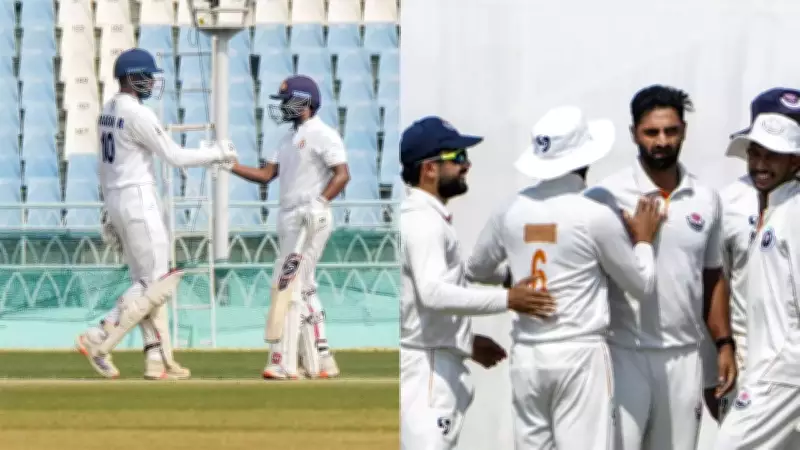
This week's Ranji Trophy semifinals presented a stark visual contrast that speaks volumes about the state of domestic cricket in India. At the Ekana Cricket Stadium in Lucknow, the capital of Uttar Pradesh, the semifinal clash between Karnataka and Uttarakhand unfolded before largely deserted stands. The atmosphere was subdued, with the echoes of bat meeting ball often the only sound breaking the silence.
Meanwhile, approximately 55 kilometers from Kolkata, the Kalyani Stadium was a cauldron of noise and passion. A boisterous, capacity crowd passionately backed Bengal and the eventual finalists, Jammu and Kashmir, in the other semifinal. This wasn't just a difference in attendance; it was a fundamental difference in energy and engagement.
The Metropolitan Disconnect and the Tier-2, Tier-3 Surge
This contrast underscores a frequently overlooked truth in Indian cricket. In major metropolitan centers like Bengaluru, Mumbai, or Kolkata—cities that regularly host high-profile international fixtures and the glitzy Indian Premier League—even star-studded Ranji Trophy contests often struggle to capture public imagination and fill stadiums. The domestic red-ball game competes with a saturated calendar of shorter, more glamorous formats.

However, relocate the same prestigious fixture to a tier-2 or tier-3 city, and the dynamic shifts dramatically. The ongoing ICC T20 World Cup and the consequent unavailability of Bengaluru's M. Chinnaswamy Stadium have serendipitously turned into a blessing for domestic cricket. For the first time in its history, Hubballi will host the Ranji Trophy final, showcasing this very trend on the grandest domestic stage.
Historical Precedent: Passion Beyond the Metros
The past offers compelling proof of this deep-seated love for the game away from the major metros. The 1996–97 Ranji Trophy final, held at the Captain Roop Singh Stadium in Gwalior, was a landmark event as the country's first day-night first-class match. It drew massive, enthusiastic crowds despite the host state, Madhya Pradesh, not even featuring in the summit clash. While Mumbai clinched the title on the virtue of their first-innings lead over Delhi, the enduring memory was the overwhelming public response from a city not considered a traditional cricket powerhouse.
Over subsequent decades, smaller towns and cities have consistently embraced domestic cricket with a raw passion that often eludes their bigger counterparts. This trend is poised to continue as Karnataka prepares to host Jammu and Kashmir in the final at the KSCA Rajnagar Stadium in Hubballi, starting Tuesday.
The last time a tier-2 city in Karnataka staged a Ranji final was in the 2009–10 season at Mysuru. In a thrilling finish, a Wasim Jaffer-led Mumbai edged out Karnataka by a mere six runs. The stands were packed beyond official capacity, with some ardent fans even resorting to watching the action from treetops outside the ground—a vivid testament to the unmatched enthusiasm.
Voices from the Game: Impact and Inspiration
Former India pace spearhead Javagal Srinath, who honed his craft in Mysuru, strongly advocates for taking marquee domestic matches to smaller centers, citing their transformative impact.
"It is a brilliant idea to host a Ranji Trophy final in a tier-2 or tier-3 city because a generation draws inspiration from it," Srinath emphasized. "Enthusiasm in such places is unmatched. I have nothing against bigger cities, but how people there receive domestic cricket pales in comparison to the fervor seen in smaller towns."
He highlighted the profound effect on aspiring cricketers in these regions. "Budding players in smaller towns have limited exposure to top-level live cricket, so they value domestic matches immensely. Connection to any sport is forged through players. Watching their idols represent the state instils a tangible belief. If a youngster from Mysuru sees someone from his region succeed, it directly upgrades his own belief that he can achieve the same."

Echoing this sentiment, former Karnataka cricketer Avinash Vaidya, who featured in 46 first-class and 25 List A matches, recalled how watching stalwarts like G.R. Vishwanath, Roger Binny, and Syed Kirmani during local tournaments in Hubballi shaped his own ambitions.
"People starved of watching established cricketers see these matches as their gateway to stargazing," Vaidya explained. "Many cannot afford the time or expense to travel to Bengaluru for IPL or international matches. So, taking domestic cricket to them is not just important; it's vital for nurturing the sport's grassroots." Reflecting on his own journey, the former wicketkeeper added, "As a 15-year-old club-level player, the experience of playing against greats representing their institutions was life-changing."
The Unassuming Heartland: Where Nothing is Taken for Granted
In the smaller towns and cities of India, nothing in cricket is taken for granted—not even the historic Ranji Trophy. There is a palpable sense of occasion, a hunger to witness quality cricket firsthand, and a direct, emotional connection to the players representing their state. This stands in sharp contrast to the sometimes-jaded audiences in metros saturated with cricket entertainment.
Perhaps this fundamental difference in perception and value is precisely why domestic cricket often discovers its most passionate, vocal, and dedicated audience in these very pockets of the country. The upcoming final in Hubballi is not just a contest for the trophy; it is a celebration of cricket's enduring heartland, where every run and wicket is cheered with unbridled passion, reminding everyone of the game's deep roots beyond the bright lights of the major cities.