Shivam Dube's Remarkable Transformation: From One-Dimensional Hitter to Complete T20 Powerhouse
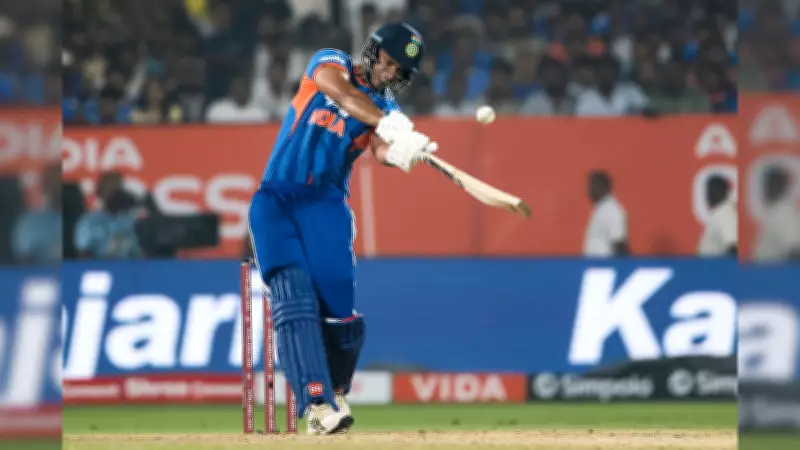
The tactical retreat of New Zealand captain Mitchell Santner during the fourth T20 International in Visakhapatnam spoke volumes about Shivam Dube's evolution as a cricketer. As Dube launched Santner's first delivery over long-on with effortless power, the Kiwi skipper immediately recognized his strategic error in feeding the left-hander's preferred arc. What followed was a masterclass in modern T20 batting that revealed Dube's dramatic transformation from a spin-only specialist to a complete batting threat.
The Tactical Dilemma: Pace or Spin Against an Evolving Threat
Santner's subsequent decision to bring on off-spinner Glenn Phillips instead of pace bowlers Matt Henry or Jacob Duffy represented more than just a bowling change—it was an admission that traditional plans against Dube no longer worked. The New Zealand captain faced an impossible choice: risk feeding Dube's established strength against spin or challenge his newly-developed prowess against pace. This tactical conundrum highlighted how far the Indian all-rounder has come in his cricketing journey.
"I've seen him do that a lot and he hits it very far," Santner admitted after the match, his admiration evident. "Dube is very clear in what he wants to do. When the spinner comes on, he knows that's a good match-up for him, and it doesn't matter if it's the first ball or his 20th ball, he's going to try to take it on."

Statistical Evidence of a Complete Transformation
The numbers tell a compelling story of Dube's development. Since joining Chennai Super Kings in 2022 as their designated middle-overs power-hitter, Dube has launched an impressive 67 sixes against spin bowling in T20 cricket—earning him the nickname "Aaru Saamy" (Six God) among CSK faithful. However, the more significant statistic is the 78 maximums he's hit against pace bowling during the same period, demonstrating his evolution into a complete batsman.
This represents a dramatic shift from his earlier limitations. Just two years ago, Dube presented a favorable match-up only against spin, displaying visible discomfort against short-pitched bowling and struggling to accelerate against quality pace. Captains had a clear blueprint: attack him with seamers early and neutralize his power-hitting capabilities.
The Chennai Super Kings Effect: Role Clarity and Technical Refinement
CSK batting coach Mike Hussey has observed Dube's transformation firsthand. "Teams would come in and bowl a lot of short balls and he would either duck out of the way or defend," the Australian legend noted before Dube's India recall in 2024. "Now the bowlers are still coming in with the same plan, but he's been able to score off it as well. He's been able to find boundaries."
The Chennai franchise provided Dube with something invaluable: absolute clarity of role. Beyond team meetings and tactical discussions, CSK publicly reinforced his identity as a six-hitting specialist, building his confidence and allowing him to transform reputation into consistent performance. This psychological foundation, combined with technical refinement, has created a batsman capable of handling diverse bowling challenges.
Technical Evolution: From Awkward Defense to Confident Aggression
During his match-winning 23-ball 65 in Visakhapatnam, Dube showcased his technical improvements against various bowling types. He deposited Jacob Duffy's off-cutter over mid-wicket with authority, sent a low full-toss sailing over square-leg, and launched Matt Henry's pace over long-on—three towering sixes that demonstrated his comfort against different bowling styles.
The transformation isn't just about power; it's about technique and mindset. Dube's improved hip rotation, reminiscent of a golfer's swing, allows for better weight transfer and power generation. His ability to avoid getting locked in defensive positions enables him to free his arms and execute powerful shots against both pace and spin.

The Player's Perspective: Continuous Improvement and Role Understanding
"There are many things people upgrade. For me also, it is very important. I can't be the same as I was," Dube explained with quiet confidence. "Match-ups are very important. They want me to hit spinners. My role is to get the strike rate high in the middle overs. That is what I always try. Not just against spinners but fast bowlers as well."
That final statement—delivered almost as an afterthought—encapsulates his journey. While natural advantages like long levers, exceptional reach, and a gifted bat-swing provide the foundation, it's the manufactured skills developed through off-season grinding against quick bowlers that have transformed Dube into a complete T20 package.
Broader Implications for Indian Cricket
Though Wednesday's explosive innings came in a losing cause, it injected life into a game that appeared decided and provided Indian cricket with its most valuable commodity heading into the T20 World Cup: a finisher who has evolved beyond his limitations. Dube's composed 33 in the Asia Cup final against Pakistan—an innings built on temperament as much as power—had already signaled his growing importance to India's plans.
Now, with his improved game against pace bowling complementing his established prowess against spin, Dube presents opposition captains with a genuine tactical headache. His evolution from a one-dimensional hitter to a complete middle-order enforcer represents one of Indian cricket's most significant developments in recent years, perfectly timed ahead of global T20 competitions.