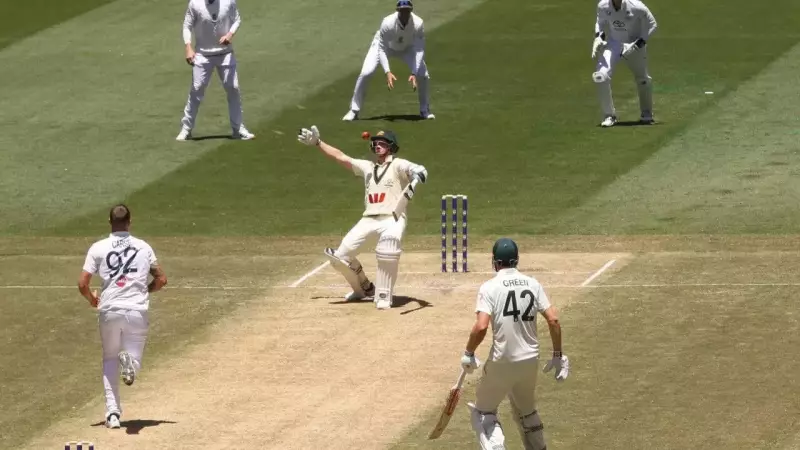
Australian skipper Steve Smith pointed directly at the excessive grass left on the Melbourne Cricket Ground (MCG) pitch as the primary reason for the extraordinarily difficult batting conditions witnessed during the fourth Ashes Test. The match concluded inside just two days, with England securing a four-wicket victory on Saturday, ending their long wait for a Test win on Australian soil.
A Match That Defied Convention
The contest was remarkably short-lived, with a staggering total of 36 wickets tumbling across only six sessions of play. The carnage began on the opening day, which saw 20 wickets fall, followed by another 16 on the second day. This rapid conclusion left players and fans alike debating the nature of the playing surface.
Smith, in the post-match press conference, provided a detailed technical explanation. He stated that the 10mm layer of grass left on the pitch was a decisive factor. "It probably started quite slow and it's hard to explain. Not tennis bally normally, that's from like the moisture of the wicket," Smith remarked, attempting to describe the unusual behaviour.

The Grass Factor and Seam Movement
Elaborating further, the Australian captain explained how the thickness of the grass cover impacted the ball's trajectory after pitching. "I think because of the thickness of the grass. The ball was just sitting in the grass, if that makes sense to you," Smith said.
He gave a specific example from his own experience: "Like I felt in the first innings, a couple almost like chipped one to mid on playing a defensive shot that just sort of sat in the grass and it was tricky to drive the ball because of how much it was. The seam was just catching the grass and it was stopping." This excessive seam movement made it nearly impossible for batters from either side to settle into an innings.
"It was tricky. No one could really get in. I think when you see 36 wickets across two days, that's probably too much," Smith conceded, clearly indicating the pitch did not offer a fair balance between bat and ball.
Captains' Verdict on the Conditions
Smith even suggested a minor adjustment could have made a significant difference. "It probably did a little bit more than they wanted it to. Maybe if we dropped it down to eight millimetres, it would be about right," he proposed.
His counterpart, England's Ben Stokes, echoed the sentiment that a two-day Test was far from ideal. While acknowledging that teams must adapt to presented conditions, Stokes was forthright. "When you go out there and you're faced with those conditions, you've got to crack on and deal with it," Stokes stated. "But being brutally honest, that's not really what you want."
The match will be remembered not just for England's historic victory, breaking their drought in Australia, but also for the intense scrutiny it brought upon pitch preparation in Test cricket. The comments from both captains highlight a shared concern for preserving the traditional, competitive nature of the five-day format.