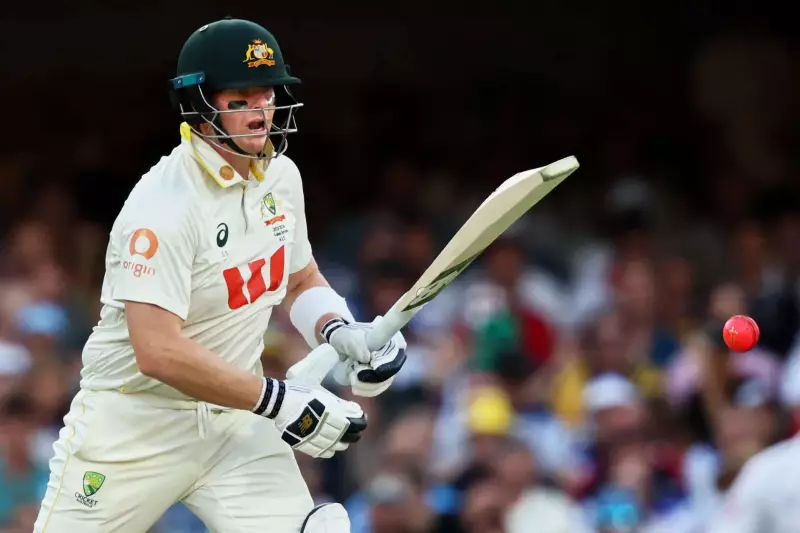
In a bid to conquer the unique challenges of the day-night Test format, Australian cricket star and stand-in captain Steve Smith has unveiled a novel visual aid during the second Ashes 2025-26 Test at The Gabba. Smith was seen sporting distinctive black anti-glare tape strips under his eyes, a tactical move aimed at improving his ability to track the pink ball under the stadium lights.
Combating Visibility with a Proven Technique
The decision stems from Smith's well-documented past struggles with the pink ball's visibility. Having played 13 of his 120 Test matches with the pink ball, Smith is among the world's most experienced players in this format, yet the glare from the lights has consistently posed a problem. Before the match, Smith explained his new approach, stating that he had been trialling the strips in the nets and found a "large difference" in his ability to pick up the ball.
This method is not entirely new to cricket; it was famously used by legendary West Indies batter Shivnarine Chanderpaul. While common in American football, its application in cricket has gained renewed global attention following Smith's high-profile adoption in a crucial Ashes contest.

The Unique Demands of Pink Ball Cricket
Smith elaborated on the specific difficulties posed by the pink ball, which behaves distinctly from the traditional red one. "The (pink) ball reacts differently to a red one. It can change quickly and can start moving randomly," he noted. This unpredictability forces batsmen to constantly adapt. Smith emphasised the mental battle, saying success hinges on being "one step ahead" and devising plans to counter the ball's sudden movement.
The day-night Test format, designed to attract larger audiences, has compelled players to innovate and develop personalised strategies. Smith's use of the eye strips is a prime example of how elite athletes are tailoring their preparations to overcome the specific environmental and equipment-based hurdles of modern cricket.
A Strategic Move in a High-Stakes Series
Smith's proactive measure highlights the intense preparation and minute detail that goes into Ashes cricket. By addressing a known weakness head-on with a simple yet effective tool, the Australian captain demonstrated his commitment to gaining any possible advantage. His extensive experience with the pink ball, coupled with this new tactic, was a key subplot as Australia aimed to assert dominance in the marquee series.
The move also sparks conversation about the evolution of player gear and tactics in response to different game formats. As cricket continues to experiment with day-night Tests, such player-led innovations in dealing with visibility and ball behaviour are likely to become more commonplace, blending traditional skills with modern sporting science.