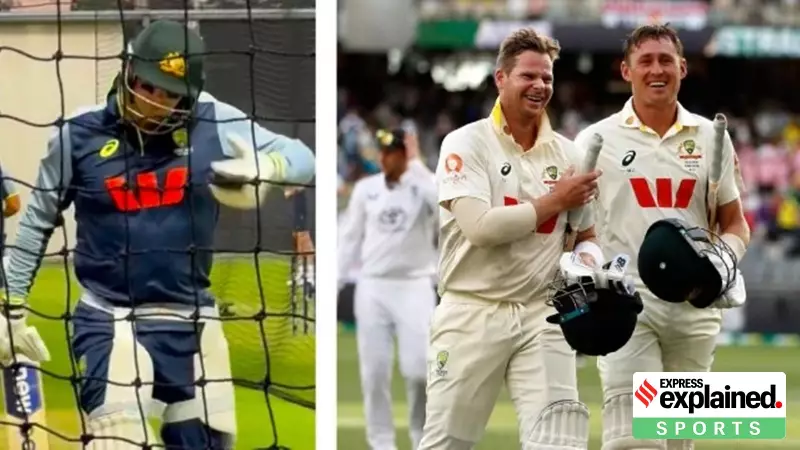
Australia's stand-in captain Steve Smith has adopted a unique visual aid in his preparations for the crucial second Ashes Test against England in Brisbane. The 36-year-old batting maestro was spotted during Sunday's net session wearing distinctive black adhesive strips, known as eye blacks, beneath his eyes. This sighting came just days before the day-night pink-ball contest is scheduled to begin at the Gabba on December 4.
The Visual Challenge of the Pink Ball
Smith, a veteran of 13 out of 14 possible pink-ball Tests, has openly discussed the unique difficulties posed by the fluorescent cricket ball. His record in day-night matches stands at 815 runs with an average of 37.04, which is notably lower than his extraordinary career average. The player himself has admitted to finding the pink ball "a completely different game," particularly when it comes to picking it up during certain phases of the day under the floodlights.
The core issue lies in the ball's construction. The pink ball is coated with a highly reflective lacquer to maintain its colour and visibility under artificial light. However, this same shine makes it prone to scattering light, which can momentarily blur a batter's vision. The most challenging period is the twilight phase, lasting 20 to 30 minutes after sunset, when natural light fades and stadium lights are not yet fully effective. During this window, the ball can blend into the background, causing batters to "lose" sight of it for a split second.

How Do Eye Blacks Work?
An eye black is a thin, matte-finish adhesive patch applied to the upper cheekbone, directly under the eye. Its primary function is to absorb stray light that would otherwise reflect off the skin and into the athlete's eyes. The facial curvature and natural reflectivity of skin can create glare from below and the sides, which degrades visual contrast. By providing a dark, light-absorbing surface, eye blacks minimise this glare, potentially improving the clarity with which a moving object is seen.
This technology is commonplace in American sports like football and baseball, which are played under bright stadium lights. In cricket, the use of eye blacks is rarer but not unprecedented. West Indian legend Shivnarine Chanderpaul famously used them throughout his career, claiming they helped reduce glare by 60-70%.
The Science and the Placebo
The efficacy of eye blacks is backed by some scientific opinion. In a 2016 review paper, Professor Brian DeBroff of the Yale School of Medicine concluded that eye black grease alters skin reflectance, thereby decreasing stray light and improving retinal image quality. For sports requiring high-contrast detection, even a marginal gain can be significant.
Interestingly, Smith's teammate Marnus Labuschagne offered a dual perspective on the gear. He acknowledged the potential science behind reducing glare from the wicket but also accepted the powerful role of a placebo effect. "If it doesn't, but it feels like it works, both ways, it works," Labuschagne remarked, highlighting the mental aspect of high-performance sport.
For Steve Smith, this meticulous preparation underscores the high stakes of the Ashes series. After leading Australia to victory in the first Test at Perth, the stand-in skipper is leaving no stone unturned in his quest for an advantage in the challenging pink-ball environment at Brisbane. His adoption of eye blacks is a clear signal of his intent to conquer one of cricket's trickiest formats in the sport's most storied rivalry.