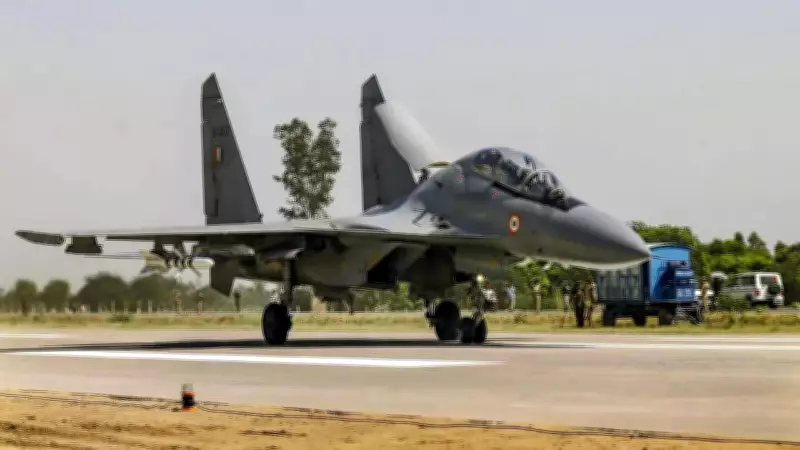
It has been 29 years since the Sukhoi Su-30 fighter jet first entered service with the Indian Air Force (IAF). This Russian-origin aircraft has fundamentally transformed India's air combat capabilities and remains a cornerstone of the nation's aerial defense strategy.
The Arrival of the Su-30
The Indian Air Force inducted the Su-30 in 1997, marking a significant leap in its fighter fleet. The aircraft was initially acquired in the Su-30K variant, but India later developed the advanced Su-30MKI in collaboration with Russia. This variant features thrust-vectoring engines, canard foreplanes, and an advanced avionics suite, making it one of the most capable fighters in the world.
Impact on Indian Air Power
The Su-30MKI has been a game-changer for the IAF. Its long-range, heavy payload capacity, and superior maneuverability have allowed India to project air power across the region. The aircraft has been extensively upgraded over the years, with indigenous weapons and sensors being integrated. It forms the backbone of the IAF's strike and air superiority missions.

- Range and Endurance: The Su-30 can fly over 3,000 kilometers without refueling, enabling deep-strike missions.
- Weapons Integration: It can carry a wide array of missiles, including the BrahMos supersonic cruise missile.
- Network-Centric Warfare: The aircraft is equipped with advanced data links, enhancing situational awareness.
Continuous Upgrades
India has invested heavily in modernizing the Su-30 fleet. The Super Sukhoi upgrade program includes new radars, electronic warfare systems, and the ability to launch beyond-visual-range missiles. These upgrades ensure the aircraft remains relevant against emerging threats.
Strategic Significance
The Su-30 has not only bolstered India's defense but also strengthened its strategic partnership with Russia. The licensed production of the aircraft by Hindustan Aeronautics Limited (HAL) has boosted indigenous manufacturing capabilities. Over 260 Su-30MKIs are currently in service, making India the largest operator of the type.
Challenges and Future
Despite its capabilities, the Su-30 fleet faces challenges such as maintenance costs and aging airframes. The IAF is exploring future upgrades and potential replacements, including the indigenous Advanced Medium Combat Aircraft (AMCA). However, the Su-30 is expected to serve for at least another two decades, continuing its legacy as a transformative force in Indian air power.