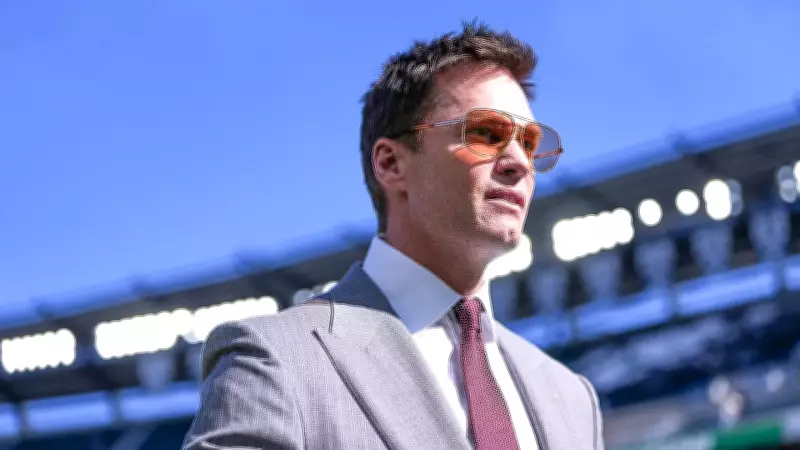
Tom Brady's recent comments about Super Bowl LX have ignited a significant controversy this week, creating waves across the NFL community. The reaction wasn't primarily about what the legendary quarterback said, but rather about what many felt he conspicuously omitted from his statements. The former New England Patriots icon found himself at the center of a heated debate after publicly distancing himself from taking sides in the upcoming championship matchup between his former team, the Patriots, and the Seattle Seahawks.
The Neutral Stance That Felt Like Betrayal
For a passionate fan base that continues to regard Brady as family, his declaration of neutrality struck a deeply personal chord. The remarks arrived during a particularly significant moment in Patriots history, marking New England's first Super Bowl appearance since 2018. Brady's legacy remains inextricably woven into the fabric of the franchise, making his apparent detachment especially jarring for supporters.
While Brady presented his position as harmless objectivity, the overwhelming response revealed just how emotionally charged the connection remains between the city of Boston and the quarterback who delivered an unprecedented six Lombardi Trophies to the region. The controversy underscores how sports loyalties transcend mere fandom, becoming part of community identity and personal history.

The Podcast Comment That Started It All
The firestorm began during Monday's episode of Brady's "Let's Go" podcast when the quarterback stated, "I don't have a dog in the fight in this one. May the best team win." This line, intended to sound diplomatic and neutral, instead resonated as a painful dismissal of two decades of shared history with Patriots Nation. In New England, where loyalty is both remembered and measured with intense scrutiny, Brady's words landed with particular force.
Bill Simmons, a lifelong Patriots supporter and prominent sports commentator, captured the collective frustration in a pointed Instagram video response. "I tried not to take it personally when Tom Brady said he didn't have a dog in this race for the Super Bowl between the Patriots and the Seahawks, even though he played for the Patriots for 20 years, won six Super Bowls for the Patriots," Simmons articulated. "There's a statue of Tom Brady outside the stadium where the Patriots play. Seems relevant...guess he doesn't remember that."
Former Teammates Voice Their Disappointment
Simmons emphasized that Patriots fans stood firmly behind Brady through every significant chapter of his career, including the challenging Deflategate scandal and his eventual departure to the Tampa Bay Buccaneers. "It's like he's gone out of his way to make it seem like he just passed through New England for two decades," Simmons continued. "And the danger of this is that for Patriots fans...he's at risk of that relationship getting a little frosty."
The sentiment found echoes among Brady's former teammates as well. Rob Gronkowski humorously suggested on Up and Adams that Brady probably wished he were playing in the game rather than watching from the sidelines. Vince Wilfork offered a more direct perspective during his appearance at Super Bowl LX Radio Row, telling WEEI, "At the end of the day, if you're a Patriot for life, you know what it is. Don't give me that political bull crap, that's just what it is. If you don't think we're gonna win, just pick Seattle then. Don't straddle the fence."
The Broader Implications of Brady's Distance
Asante Samuel also expressed disappointment, specifically noting Brady's silence toward current Patriots coach Mike Vrabel. Now serving as a minority owner of the Las Vegas Raiders, Brady may genuinely perceive himself as occupying neutral professional ground. However, for the countless fans who once celebrated his every achievement as their own, this calculated distance feels considerably colder than perhaps intended.

The situation highlights the complex dynamics between legendary athletes and the communities that helped build their legacies. As Brady transitions into ownership roles and media positions, his relationship with the Patriots fan base appears to be entering a new, more complicated phase. The emotional reaction to his Super Bowl comments demonstrates that for many supporters, athletic allegiance isn't simply about current team affiliations but about honoring shared history and mutual loyalty.
This controversy serves as a reminder that in sports, certain bonds are expected to endure beyond contracts and career moves. The intensity of the response suggests that for Patriots Nation, Tom Brady's legacy remains a living, breathing part of their collective identity, making any perceived distancing feel like a personal affront rather than a simple professional choice.