U-19 World Cup: A Melody of Shared Heritage
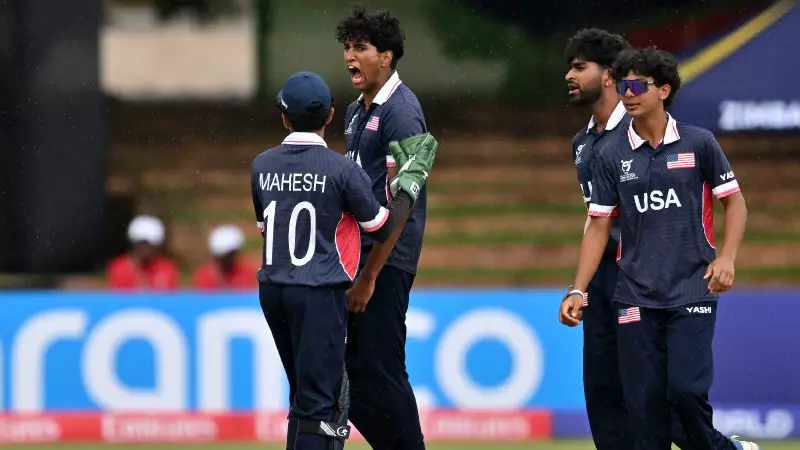
In a touching moment before India's opening match against the USA at the U-19 World Cup, something remarkable happened. As India's national anthem, Jana Gana Mana, played in Bulawayo, Zimbabwe, the parents of American cricketers joined in singing. They stood wrapped in the Stars and Stripes, yet their voices rose with the familiar tune. This scene captured more than just sportsmanship. It highlighted the deep South Asian roots that now bind global cricket.
South Asian Dominance in Numbers
Tournament records reveal a striking trend. One in every three cricketers competing has South Asian ancestry. This excludes players from nations like Tanzania or the West Indies with historical ties to the region. Out of 240 players, 60 hail directly from India, Pakistan, Sri Lanka, and Bangladesh. Another 32 from other teams trace their family origins back to South Asia.
This shift tells a powerful story. Cricket, once a coloniser's sport, is now dominated by those from former colonies. The numbers show how the game has been embraced and transformed by South Asian communities worldwide.

Breaking into Established Teams
While associate nations often feature many players of Indian descent, a new pattern is emerging. South Asians are now making their mark in the national teams of cricketing powerhouses like Australia, New Zealand, and England.
Australia's U-19 squad includes two players of Indian and Sri Lankan origin. New Zealand boasts four. This reflects a healthy integration into mainstream societies. John James, an Australian all-rounder whose parents migrated from Kerala, feels completely at home. "I feel very Australian, having been brought up here," he says. "I speak Malayalam at home, but I am Australian in everything because I grew up in an Australian environment."
Australia has embraced multiculturalism in cricket. Participation by players with South Asian backgrounds has doubled to 20% in the past five years. Stars like Usman Khawaja, Gurinder Sandhu, and Tanveer Sangha have paved the way.
New Zealand's Early Integration
New Zealand saw this integration begin decades earlier. Beyond the four in the U-19 squad, two key players in the senior team are sons of migrants. "Not just cricketers, there are a lot of coaches from India in the New Zealand set-up," notes Debu Bainik, a Wellington-based coach from Assam.
Behind batting star Rachin Ravindra's success is mentor Sriram Krishnamurthy. This shows how South Asian influence extends beyond players to coaching and development.
England's Community Engagement
England's U-19 team features two cricketers with Pakistani links. Farhan Ahmed is the younger brother of England international Rehan Ahmed. Ali Farooq comes from Loughborough Town, where South Asians make up 15.7% of the population.
The England and Wales Cricket Board has launched a South Asian Communities Action Plan. Through workshops and proactive schemes, they are engaging with these communities to nurture talent.
Stories of Sacrifice and Belonging
Behind every player lies a story of sacrifice. James's parents, registered nurses, moved from West Bengal to Sydney when he was just months old. "Their timings were really odd," he recalls. "They had night shifts and sometimes worked two or three shifts successively. In between all this, they had to drive me to the academy for training and then pick me up again."
Teammate Aryan Sharma shares similar struggles. "My parents always used to tell me that moving from one country to another was hard," he says. "It was initially difficult to adapt to the Australian lifestyle." Yet both insist they are "strictly Australians."
New Zealand all-rounder Snehith Reddy enjoys biryani from his father's Andhra Pradesh and admires Telugu star Junior NTR. His father took him to club cricket games every weekend, passing down the love for the sport.
Cricket as a Binding Force
For many, cricket is a family tradition. USA all-rounder Utkarsh Srivastava was inspired by an elder brother. For James, it was a friend who moved to Sydney. These connections show how cricket bridges generations and geographies.

Cricket binds South Asia with the world, and the world with South Asia. The U-19 World Cup is not just a tournament. It is a celebration of shared heritage, hard work, and the global spread of a beloved sport.