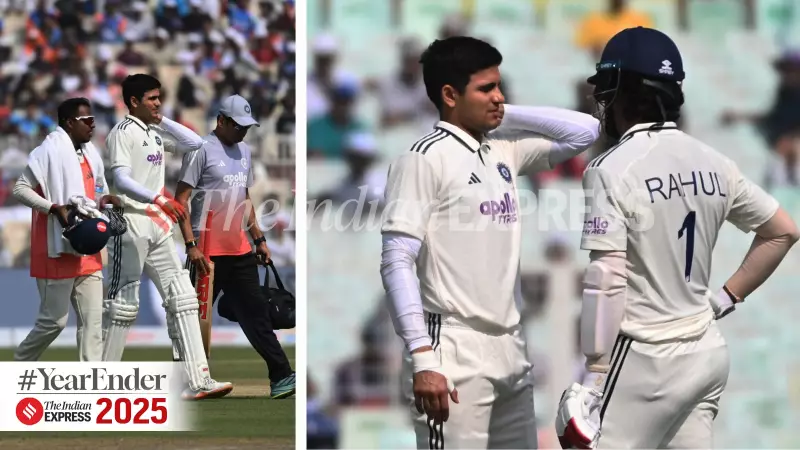
The year 2025 in Indian cricket could have unfolded along a dramatically different path had a single moment on a Kolkata pitch not occurred. The pivotal incident was a neck spasm suffered by captain Shubman Gill during the first Test against South Africa, an event whose full significance only became clear in the tumultuous weeks that followed.
The Fateful Sweep in Kolkata
During the second day of the opening Test at Kolkata's iconic venue, Shubman Gill attempted a routine sweep shot. In that instant, he tweaked his neck and was forced to retire hurt. The immediate impact was India losing that match by a narrow margin. Later, even South Africa's legendary pacer Dale Steyn remarked that fortune had favoured his nation, suggesting a fit Gill might have steered India to victory.
Gill's absence continued into the second Test, where India faced a crushing defeat, resulting in a 2-0 series whitewash. This shocking outcome immediately placed immense pressure on the team management, particularly head coach Gautam Gambhir. His decision to prepare a rank turner for the Kolkata Test and his subsequent team selections for the next match came under intense scrutiny.

The White Noise and Veteran Comeback Calls
The Test series defeat unleashed a wave of speculation and criticism. The subsequent ODI series saw Virat Kohli roar back into form with two combative, statement-making centuries. This performance amplified the growing 'white noise' surrounding the team. Critics and fans began loudly questioning the Test retirements of both Kohli and Rohit Sharma, forgetting that India had both stalwarts in the ranks during previous home and away Test losses to New Zealand and Australia.
While Gambhir's tactical choices warranted examination, the ensuing demands for Kohli and Rohit's Test recalls were deemed extravagant. Rumours swirled that Kohli was prepared for a Test return, which he personally squashed during a post-match interaction after the first ODI in Raipur. Further debate erupted over the policy of having the veterans play domestic cricket, a move that remained sensible with the ODI World Cup nearly two years away, ensuring both superstars maintained match fitness and sharpness.
A Different Timeline: What Could Have Been?
Analysts argue that had Shubman Gill been fit for those two Tests and potentially secured a win, the narrative would have been wholly different. The ODI series would have been viewed purely as a fitness benchmark for Kohli and Rohit, not a referendum on Test selection policies. The positive outcomes of the Test retirements—Rohit's improved fitness and Kohli's evident hunger—were being overshadowed by misplaced criticism.
The core argument against the backlash was that results in ODI matches on flat pitches should not be used to judge Test selection decisions. Rohit's Test form had been inconsistent for a while, and Kohli's struggles in the longest format spanned several years. Much of the post-series hullabaloo might have been avoided if Gill had not gone down on his knee on that fateful Kolkata day.
2025: A Year of Bold Decisions
Despite the controversy, 2025 will be remembered as a significant year for Indian cricket in challenging 'star culture.' The decisions surrounding Kohli and Rohit's Test futures, and even Shubman Gill's non-selection for the T20 World Cup squad, pointed towards a selection philosophy based on current form and long-term planning. This approach, though triggering intense debate, is seen by many as a necessary step forward, one where reactive handwringing should be avoided in favour of appreciating a broader vision.
The ripple effect from Gill's neck spasm proved how a single moment of misfortune can alter perceptions, ignite national debates, and test the resolve of a team's leadership. It underscored the fine margins in sport where a twist of fate can rewrite an entire year's storyline.