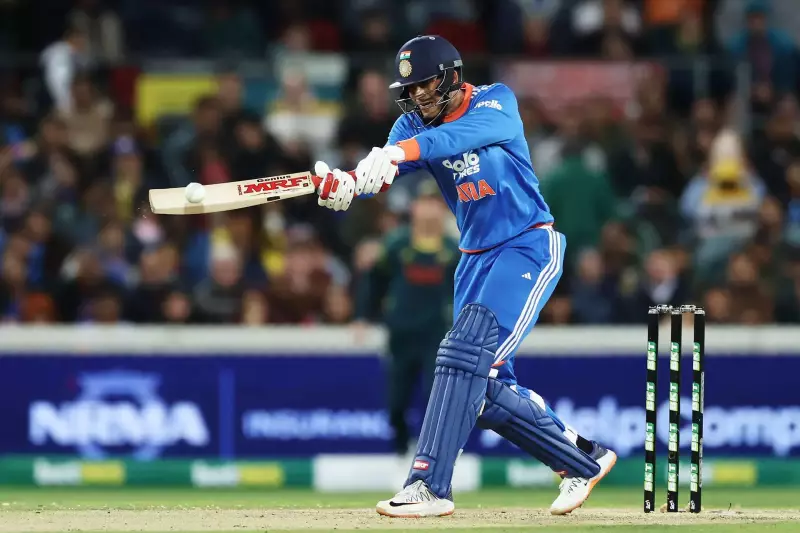
Former cricketer and analyst Sanjay Manjrekar has offered a sharp critique of the Indian selection committee's decision to drop Shubman Gill from the T20 World Cup 2026 squad. Taking to social media platform X, Manjrekar framed the omission not as a bold, forward-looking move but as a tacit acknowledgment and correction of a previous misstep by the selectors.
The England Series Reference and a Stark Observation
Manjrekar's pointed post carried a significant reference to India's tour of England in 2025. During that Test series, Shubman Gill amassed a staggering 754 runs, a performance of such brilliance that it could easily sway selection decisions. However, Manjrekar's core observation cuts through that narrative. He underscores that success in Test cricket does not automatically translate to a guaranteed spot in the T20 format, especially in a high-stakes World Cup season.
In this context, defined roles and specific team combinations carry far more weight than individual reputations or performances in other formats. The selectors' philosophy appears to have shifted decisively towards constructing a team of specialists for distinct phases of the game, rather than simply assembling a group of the 15 most talented individuals.

Inside the Selectors' Blueprint: Specialists Over Stars
The composition of India's T20 World Cup squad provides clear evidence of this role-specific strategy. The team includes two wicketkeeping options in Sanju Samson and Ishan Kishan, both of whom are also capable of opening the batting. This offers flexibility at the top of the order. Furthermore, the selectors have opted for a high-powered opening specialist in Abhishek Sharma and a designated late-innings finisher in Rinku Singh.
Chairman of selectors Ajit Agarkar's explanation reinforced this logic. He mentioned the team was "short of little runs" and emphasized the critical need to balance combinations. Agarkar pointed out that choosing a wicketkeeper to open the innings inherently means sacrificing a slot for a pure, specialist batter. This reasoning gains substantial weight when examining Gill's recent T20 International form.
Gill's Form and the Pragmatic Correction
The statistics reveal a concerning dip in Gill's T20I performances. He has not scored a half-century in his last 18 innings in the format. Compounding this lack of runs is the management of a persistent foot injury, which may have affected his consistency and power-hitting capabilities. What might have initially been an emotionally-driven selection following his England Test heroics has now been addressed with a pragmatic, performance-based correction.
Manjrekar's analysis highlights a broader, more disciplined shift in the Indian team's selection policy. The management has sent a clear message: even high-profile players with stellar records in other formats can be excluded if the meticulously crafted team blueprint has no clearly defined role for them. This approach prioritizes structural integrity and role clarity over sheer star power, marking a calculated and methodical build-up to the World Cup.
Ultimately, the decision to drop Shubman Gill, while controversial, signals a move towards a more strategic and unsentimental team-building process for Indian cricket in the shortest format.