FIFA World Cup 2026 Grapples With Mounting Financial Accessibility Crisis
The FIFA World Cup 2026, set to be a landmark event for soccer in North America, is encountering significant turbulence even before the first whistle blows. The controversy this time revolves not around team performances or match outcomes, but around a fundamental issue: money. A growing chorus of fans is expressing frustration and dismay over prohibitively high costs associated with attending the tournament, casting a shadow over what was envisioned as a celebration to grow the sport across the continent.
Exorbitant Ticket Prices Create Entry Barrier
The most immediate shock for supporters has been the staggering price of admission. Ticket costs have reached levels that place attending matches out of reach for many average fans. For less prominent group stage fixtures, prices are reportedly hovering around $140. However, for high-profile matches, the figures become astronomical, with some tickets commanding prices as high as $11,000.
A stark example is the United States versus Paraguay match scheduled in California. For this game, so-called "front category 1" tickets have been priced at a jaw-dropping $4,105. Even standard category tickets for this fixture remain firmly in the range of $2,000 or more. This pricing strategy has transformed the simple act of entering the stadium into a significant financial hurdle, fundamentally altering the fan experience from one of communal celebration to one of exclusive privilege.

Compounding Crisis: Soaring Travel and Transport Expenses
The financial burden does not end with ticket acquisition. Fans who manage to secure entry are then confronted with another layer of expense: dramatically inflated travel and local transport costs. This secondary cost surge is exacerbating the affordability crisis, making the overall trip to a World Cup match a luxury few can justify.
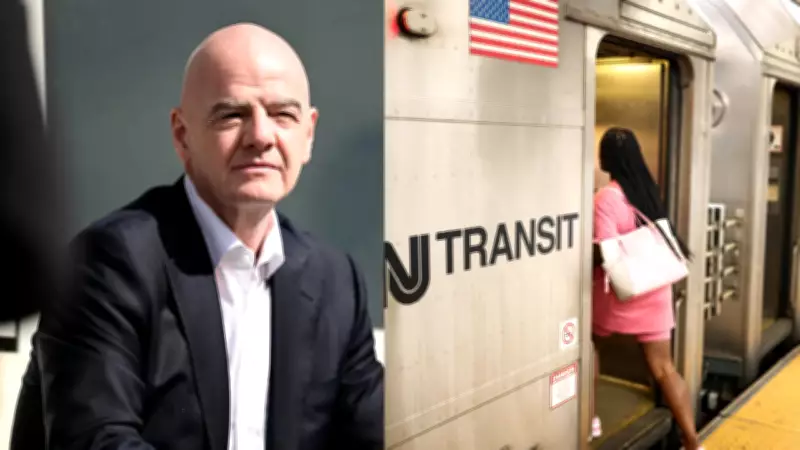
In New Jersey, transport to MetLife Stadium has become a focal point of contention. The price for a round trip has skyrocketed to approximately $150, a drastic increase from the standard rate of $12.90. Similarly, in Boston, authorities have raised train fares, with some tickets now costing between $80 and $90 for journeys to match venues.
Political and Institutional Reactions to the Funding Dispute
The situation has prompted strong reactions from political figures and sports personalities. New Jersey Governor Mikie Sherrill has been particularly vocal, highlighting a perceived imbalance in financial responsibility.
"We inherited an agreement where FIFA is providing $0 for transportation to the World Cup," Governor Sherrill stated. "And while NJ TRANSIT is stuck with a $48 million bill to safely get fans to and from games, FIFA is making $11 billion. I’m not going to stick New Jersey commuters with that tab for years to come."
FIFA, in its defense, has pointed to the original hosting agreements. The organization contends that when New Jersey agreed to host matches in 2018, it accepted responsibility for transport logistics. This agreement was reportedly amended in 2023, granting host states the authority to pass certain costs onto fans. FIFA maintains a positive outlook, asserting, "FIFA World Cup will bring millions of fans to North America along with related economic impact," suggesting that broader regional economic benefits will offset these localized expenses.
Adding to the critique, former US Men's National Team player and analyst Taylor Twellman has questioned the tournament's overarching goals. "You would have to ask the questions to FIFA and say what are we doing here? Why is that driving the narrative of the conversation and not growing the sport?" Twellman's comments underscore a concern that financial extraction is overshadowing the mission of expanding soccer's footprint.

A Tale of Two Cities: Contrasting Approaches to Fan Accessibility
Interestingly, not all host cities are adopting the same high-cost model, highlighting that alternative, fan-friendly approaches are possible. Kansas City is offering a notably affordable $50 package that provides unlimited bus rides throughout the tournament period. Philadelphia has also chosen a different path, committing to maintain regular public transport pricing and even planning complimentary fan events to enhance the experience without additional financial strain.
This stark contrast between cities raises a poignant and simple question for critics and fans alike: if some host locations can successfully implement affordable and accessible plans, why can't others follow suit? The disparity suggests that the current cost crisis is not an inevitable consequence of hosting a mega-event, but rather a result of specific policy and pricing decisions.
As the 2026 World Cup approaches, the tension between commercial imperatives and fan accessibility continues to build. The event, meant to be a catalyst for soccer in North America, now faces the challenge of ensuring it does not become an exclusive spectacle priced beyond the reach of the very supporters it aims to inspire.