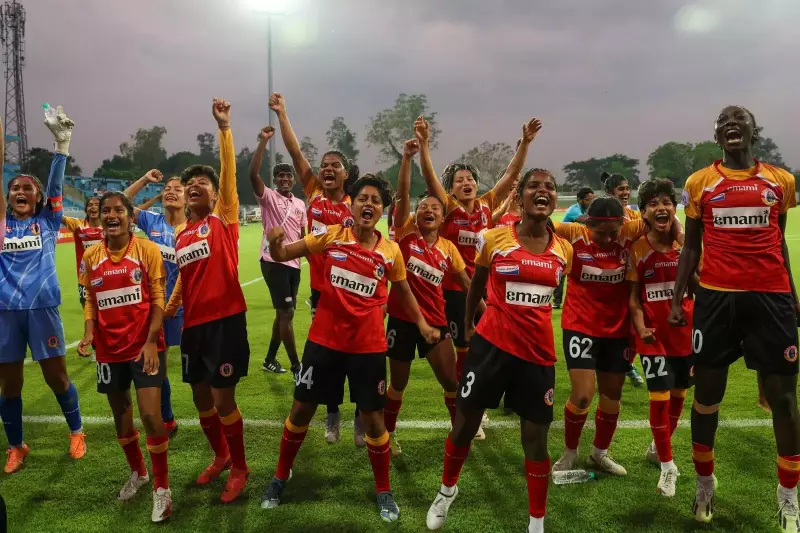
In a landmark achievement for Indian football, the women's team of East Bengal FC has scripted history on the international stage. At a time when the men's game in the country navigates a period of uncertainty, the women in red-and-gold have soared, clinching the inaugural SAFF Women's Club Championship. This victory marks the first-ever international trophy won by an Indian women's football club, setting a glorious new benchmark.
A Dominant Campaign Culminates in Glory
The historic feat was sealed on Saturday at the Dasharath Stadium in Kathmandu, Nepal. East Bengal FC faced local favourites APF FC in the final and delivered a commanding performance, brushing them aside with a resounding 3-0 victory. This win was the exclamation point on a near-flawless tournament campaign for the Indian side.
Their dominance was absolute throughout the championship. The reigning Indian Women's League (IWL) champions displayed sheer superiority, scoring 16 goals across five matches while maintaining an impeccable defensive record by conceding zero goals. This statistic alone underscores the team's comprehensive strength and tactical discipline on foreign soil.

The Goal-Scoring Prodigy: Fazila
Leading the charge for East Bengal was their prolific forward, Fazila. She emerged as the tournament's standout player, finishing as the top scorer with an impressive nine goals. Her goal-scoring prowess was instrumental in dismantling oppositions and powering the team to the title. Fazila's performance has not only brought her personal acclaim but has also highlighted the rising talent pool within Indian women's club football.
A Beacon of Hope and a Question for the Future
This triumph transcends a single trophy. It serves as a powerful beacon of progress for women's football in India, proving that the clubs can compete and conquer at the continental level. The success of East Bengal FC's women's team offers a compelling narrative of growth and potential in a sector that often struggles for recognition and resources.
However, this milestone also casts a spotlight on existing disparities within the Indian football ecosystem. The celebratory news naturally leads to introspection about development pathways and infrastructure. It prompts questions like the one raised about the iconic Mumbai Maidans—venerable breeding grounds for football talent—and whether such traditional hubs are receiving the attention needed to nurture the next generation of champions.
The victory in Kathmandu is not an end, but a promising beginning. It sets a new standard for women's club football in South Asia and provides immense inspiration for young girls across India. The challenge now is to build sustainable systems that ensure this historic win is a foundation for future success, not an isolated peak.