The beautiful game is increasingly being marred by an ugly, cynical art: the deliberate wasting of time. A shocking incident during the high-stakes Premier League clash between Arsenal and Liverpool on January 9, 2026, has thrown this pervasive issue into sharp relief, forcing the football world to confront a tactic that is eroding the sport's soul.
The Shove That Shocked Football
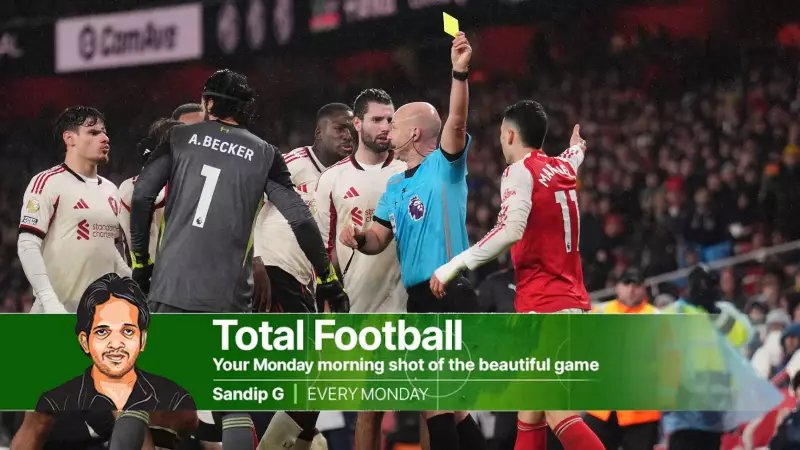
With the clock ticking and Arsenal desperately pushing for a winning goal against league leaders Liverpool, the game was halted near the touchline. Liverpool's young right-back, Conor Bradley, was down, appearing to be in significant pain. In a moment of sheer frustration, Arsenal's usually mild-mannered Brazilian winger, Gabriel Martinelli, shoved the injured Bradley off the pitch, believing he was feigning injury to run down the clock.
Martinelli's assumption was catastrophically wrong. Bradley's injury was genuine and severe. He had to be stretchered off, was later seen on crutches, and faces a lengthy rehabilitation period. While Martinelli issued a public apology and sent a personal message to Bradley, the damage was done. The act was widely condemned, but it was also a stark symptom of a much larger disease infecting modern football.

A Tactic Normalized: The Data Behind the Deception
Liverpool manager Arne Slot pinpointed the core problem, stating that players pretending to be injured or deliberately slowing play has become so common that it breeds instant distrust. This isn't gamesmanship; it's a calculated strategy. The introduction of longer stoppage-time allowances has been completely undermined by players and teams finding new ways to delay.
The statistics are damning. In the 2024-25 Premier League season, the average total match time was 100 minutes, but the ball was in play for only 56 minutes and 59 seconds. Shockingly, this figure has dropped further this season to just 55 minutes and 5 seconds. Some matches have seen effective playing time dip to barely over 45 minutes.
The primary culprits are clear:
- Goal-kicks waste an average of 7 minutes and 42 seconds per game.
- Throw-ins are even worse, consuming over 11 minutes per match.
This constant disruption kills the flow of the game, turning potential spectacles into fragmented, stop-start affairs. Free-flowing football is becoming a nostalgic memory.
No Easy Fix for a Deep-Rooted Problem
The challenge for lawmakers and referees is immense. Time perception is subjective, and players are willing to accept yellow cards for tactical time-wasting, just as they do for tactical fouls. The Martinelli-Bradley episode is an extreme consequence of an environment where cynicism is rewarded.
While the incident from January 2026 will be remembered for Martinelli's petulance, the match itself was riddled with smaller, accepted time-wasting acts. The solution requires a cultural shift, enforced by stricter, more consistent refereeing. As the legendary Johan Cruyff once noted, time is never a footballer's friend. But the sport must decide whether allowing teams to artfully steal it is a virtue or a vice that is destroying the very essence of the competition.
The call for officials to act tougher has never been more urgent. Without decisive action, such ugly moments will cease to be shocking exceptions and become inevitable outcomes of a win-at-all-costs mentality that values points over the spirit of the game.