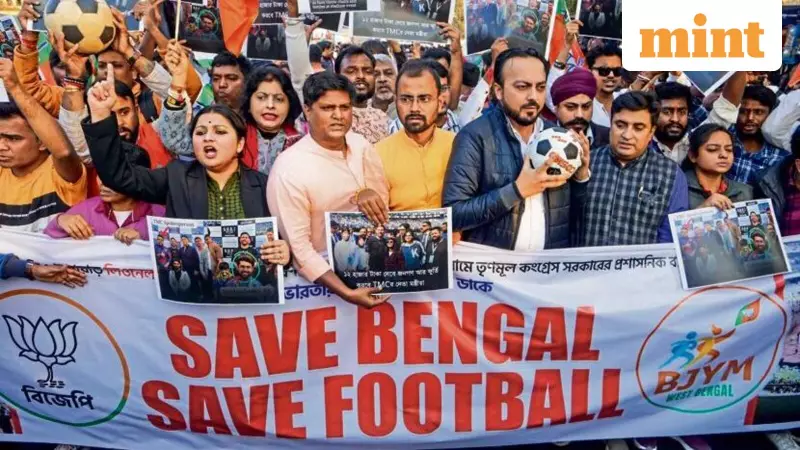
The much-hyped visit of global football icon Lionel Messi to Kolkata last weekend culminated not in celebration, but in a spectacle of chaos and heartbreak. What was meant to be a historic moment for the city's legion of passionate fans turned into a stark display of mismanagement and VIP entitlement, leaving thousands feeling cheated and the city's reputation tarnished.
A Dream Visit Turns into a Nightmare
The event at the Yuva Bharati Krirangan stadium, where Messi was scheduled to appear, quickly descended into disarray. The Argentine superstar entered the venue at 11:30 am, only to be immediately swarmed by approximately 70-80 officials, politicians, and semi-celebrities clamouring for selfies and autographs. For ordinary fans who had paid significant sums from their hard-earned money, Messi remained a distant figure, obscured by the VIP scrum.
His team later complained that even police personnel seemed more focused on capturing selfies than on controlling the crowd. Messi was whisked away from the stadium by 11:52 am, even before the arrival of West Bengal Chief Minister Mamata Banerjee and actor Shah Rukh Khan. This abrupt exit, coupled with the visible VIP access, ignited fury among the waiting spectators.

The Real Cost: Stories of Fan Devotion and Despair
The true tragedy lies in the personal stories of the fans who travelled great distances and made financial sacrifices. Sanatan Mandal, a fish seller from Bankura district, took a high-interest loan to buy a ticket worth ₹4,000. He spent the night at Howrah station to be on time, only to leave feeling "finished." In another heartbreaking account, a 60-year-old man from Krishnagar, over 120km away, spent ₹7,080 on tickets to fulfil the dream of his wheelchair-bound son, a Messi obsessive. They saw nothing.
These narratives, reported by the Bengali newspaper Anandabazar Patrika, highlight the deep emotional and economic investment of true fans. Their devotion was met with a system that privileged proximity over passion. As one fan, Sabuj Sarkar, had prophetically told a journalist back in 2011, "There are more football fans in West Bengal than the entire population of Argentina." Their love was betrayed.
VIP Culture and the Aftermath of Chaos
The ensuing frustration boiled over into vandalism. The crowd, feeling deceived, began pelting the field with water bottles, uprooting seats, destroying sound equipment, and looting items like flowerpots and carpets. One man carrying a carpet roll justified his actions to a news channel, stating he had spent ₹10,000 and failed to see Messi's face.
While the images of rampage went viral, the core issue was the blatant VIP culture. A VIP passholder was seen clutching Messi's hand for a selfie as he tried to wave to the crowd. Organisers' pleas for the throng of dignitaries to move aside were ignored. This incident became a powerful metaphor for how access and social capital, often displayed through celebrity selfies, trump genuine fan experience in India.
The political fallout was swift but predictable. The opposition blamed the ruling party, which in turn blamed the private event organiser and had its head arrested. Sports Minister Arup Biswas, featured in a newspaper photo "almost rubbing up against" Messi, has since resigned. However, as the article notes, nothing will likely happen to the selfie-seeking VIPs who ruined the event.
A Broader Reflection on Sport in India
The debacle sparked a national conversation beyond Kolkata. Olympic gold medalist Abhinav Bindra tweeted, questioning whether society is building a culture of sport or merely "celebrating individuals from afar." He expressed a "quiet sadness" at the thought of what could be achieved if a fraction of the energy and investment directed at the Messi tour was channelled into grassroots sports foundations.

The event also served as a painful reminder of India's own footballing stature. Unlike Pele's 1977 visit to Kolkata, where he played against local club Mohun Bagan, the Messi tour was a non-sporting "celebration." Fans paid exorbitantly just for a glimpse, not to see athletic action. Fourteen years after Messi's first visit in 2011, the question of what such events do for Indian football remains painfully relevant.
In the aftermath, the newly installed 70-foot statue of Messi stands as a glaring memento of the city's loss of face. For a metropolis often feeling like an afterthought in modern India—lacking direct flights to Europe or concerts by bands like Coldplay—this was a chance to shine. Instead, Kolkata, in the words of the author, managed to "score a self-goal." The visit could have been a moment of bonding between a star and his fans. For those who understand fandom, the profound sense of loss is all too clear.