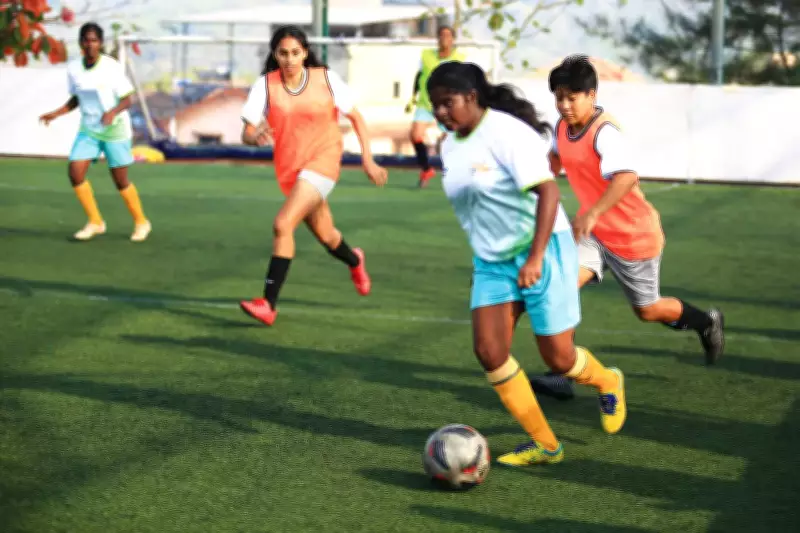
Panaji: As players entered the Agnels Football Arena in Assagao, many rubbed their eyes in sheer disbelief. For numerous participants, stepping onto a proper turf ground represented a dream come true, a stark contrast to their usual playing conditions.
Harsh Realities and Hopeful Journeys
Abhijeet Barse, CEO of Slum Soccer, highlighted the challenging backgrounds of these athletes. "Players from Delhi grew up playing near a waste segregation plant on space that is less than half of a five-a-side football turf," he explained. Those from Jammu & Kashmir had minimal access to any sports facilities, while Jharkhand faced similar infrastructural limitations. Teams from the northeast couldn't even travel to Goa for the National Inclusion Cup due to prohibitive costs and lengthy journeys.
A Platform for First Experiences
Despite these obstacles, sixteen teams competed in the 23rd edition of the National Inclusion Cup, vying for selection to represent India at the prestigious Homeless World Cup. "For many, this is their first stage, their first jersey, their first belief," Barse emphasized. "We have brought India together by creating opportunities for players who have never stepped outside their hometowns to play."

Nagpur-based Slum Soccer, founded in 2001 by Vijay Barse, uses football as a powerful tool for social transformation. The organization, originally called Jhopadpatti Football, gained recognition as the real-life inspiration behind Amitabh Bachchan's character in the movie Jhund.
Personal Transformation and Organizational Challenges
Abhijeet Barse initially questioned his father's dedication to helping the underprivileged through football. "There were personal moments that changed my view," he recalled. "A policeman at a check-in gate expressed gratitude for how my father transformed his life. Numerous parents visited our home, thrilled that their children had left bad company."
Barse acknowledged that his perspective shift didn't happen overnight. "Eventually I realized that what he was doing was important. Then I joined his cause," he said. "It's very challenging to inculcate the love for the game and explain its benefits to kids from slums and backward areas."
Securing sponsorship remains the organization's biggest hurdle. "When you know that the final outcome is not creating footballers, how do you explain that to sponsors?" Barse questioned. "We need to get underprivileged children on the field and use football to make an impact."
Success Stories and Tournament Execution
The CEO personally organized the latest tournament edition in Goa, observing from the sidelines as players from across India experienced the joy of competitive football. Many former Slum Soccer participants helped execute the event flawlessly.
Isha Silare: A Beacon of Transformation
The most shining example of Slum Soccer's impact is Isha Silare, who officiated matches with a whistle in hand. In 2024, after representing Team India at the Homeless World Cup in Seoul, she returned to the center circle as a referee during the same event in the Korean capital. This remarkable achievement made her the first attendee to both play and referee at the Homeless World Cup.
Last year, she refereed in Norway, describing it as "an unimaginable moment, and I still ask myself if I'm dreaming." Isha credits Slum Soccer for her transformation: "Slum Soccer has provided me a chance to stand out from the crowd. I come from a very underprivileged background, so there was no chance for me to just go out and play with boys, wearing shorts. When Slum Soccer was teaching me about football, they were also educating about life."
Selection Criteria and Life-Changing Opportunities
Isha now inspires all National Inclusion Cup participants who aspire to follow her path. The first step involves selection for Team India, which considers more than just football skills.

"For us, the best players are not from the winning team alone," Barse explained. "The best are those who show sportsmanship and values on the field, remain well behaved off the field, and demonstrate strong character. The selectors are all former Homeless World Cup participants who understand the tournament's spirit. Selection can be a life-altering moment."
Isha Silare's journey stands as powerful testament to how sports can genuinely transform lives, offering hope and opportunity where little existed before.