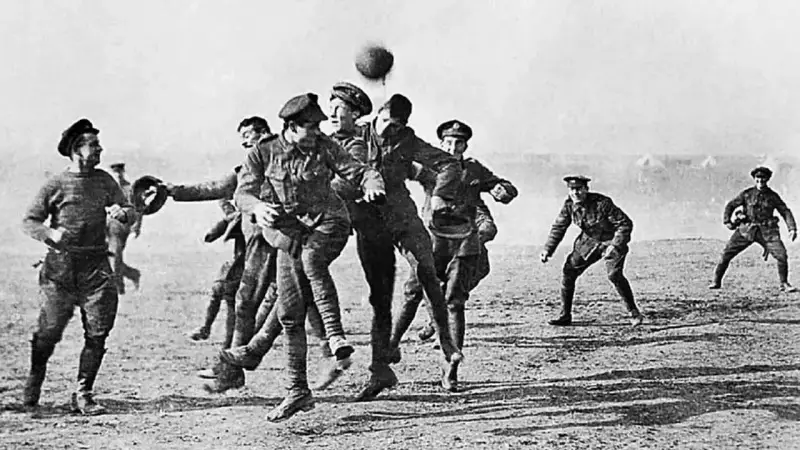
In the frozen trenches of World War I during Christmas 1914, an event unfolded that no military commander had ordered and no strategy could explain. Soldiers, who had been locked in brutal combat for months, spontaneously laid down their weapons, stepped into no man's land, and did something extraordinary—they played football together. This spontaneous ceasefire, now immortalised as the Christmas Truce of 1914, remains one of history's most poignant tales of shared humanity.
The Grim Reality of the Western Front
By December 1914, the Great War had descended into a horrific stalemate. The conflict, which pitted the Allied Powers (including France, Britain, Russia, and later the US, Italy, and Japan) against the Central Powers (led by Germany, Austria-Hungary, the Ottoman Empire, and Bulgaria), had erupted that summer with predictions of a swift end. Many young soldiers believed they would be 'Home by Christmas'. Instead, they found themselves trapped in a network of muddy, freezing trenches stretching across Belgium and northern France, facing daily horrors of shelling, disease, and death.
Life in the trenches was unbearable. The initial optimism had vanished, replaced by the grim reality of a war that showed no signs of ending. As Christmas approached, the concept of celebration felt like a distant memory for these weary men, many of whom were barely out of school.

The Miraculous Night of Carols and Courage
On the evening of December 24, 1914, an unexpected sound drifted across the deadly silence of no man's land. British soldiers stationed along parts of the Western Front heard singing emanating from the German trenches. Suspicious at first, they soon recognised the melody. The Germans were singing 'Stille Nacht'—Silent Night. This gesture of peace broke the icy barrier of war.
In response, British troops began singing their own Christmas carols. Shouts of 'Merry Christmas!' were exchanged between the lines. By Christmas morning, against all military logic and without any orders, soldiers from both sides cautiously emerged from their trenches, hands raised, weapons left behind. In a scene that defied belief, sworn enemies met in the middle, shaking hands, exchanging gifts like cigarettes, chocolate, and personal mementos, and sharing photographs of loved ones.
Football: The Universal Language of Peace
Then, the beautiful game took centre stage. In what became the defining act of the truce, soldiers started playing football. In some sectors, they used a proper leather ball; in others, an improvised ball made of tied rags sufficed. They marked goals with their caps or coats. There were no referees, no strict rules, and the ground was frozen and uneven. Yet, for a few precious hours, British and German soldiers played together.
Accounts of the score vary—some mention a German victory of 3-2—but all agree that the result was irrelevant. The true victory was the act of playing itself. This simple game, familiar to boys from England, Scotland, Germany, and beyond, transcended language and national hatred. It was a powerful reminder of home, of normal life, and of shared joy.
The temporary peace also allowed soldiers to perform a solemn duty: recovering the bodies of fallen comrades from no man's land and holding joint burial services. Men who would soon be ordered to kill each other stood side-by-side in silent prayer.
The Brutal Return to War and a Lasting Legacy
The truce was never officially sanctioned. High command on both sides was furious upon learning of the fraternisation, viewing it as a threat to military discipline and the will to fight. By December 26, 1914, strict orders were enforced, and the guns roared back to life. The war resumed its devastating course, and tragically, many of the men who had shared that moment of peace would not survive the coming months.
For years, the military establishment tried to suppress the story of the Christmas Truce, censoring letters and dismissing reports. They feared it revealed too much humanity in a time designed for mechanised slaughter. However, the truth persisted through soldiers' letters, personal diaries, and the quiet testimonies of veterans.

Today, over a century later, the Christmas Truce is celebrated globally, especially within the football community. Memorial matches are played, statues stand near former battlefields, and clubs share the story every December. It serves as an enduring testament to a profound truth: that hatred is often taught, but our common humanity is innate. Football did not end World War I, but on that cold Christmas Day, it proved that even in the darkest times, a simple game could remind enemies that they were, first and foremost, human beings.