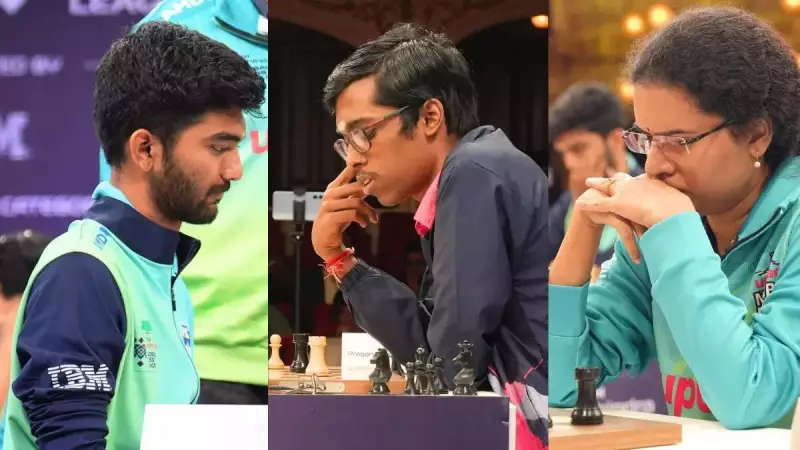
The world of elite chess has long been mythologised as a solitary battlefield of colossal egos, where players engage in what Garry Kasparov termed "mental torture." The legendary Bobby Fischer once famously remarked, "I like the moment when I break a man’s ego," a sentiment that has defined the game's cutthroat, individualistic spirit for generations. In this zero-sum arena, where one person's victory is another's defeat, Grandmaster Vidit Gujrathi notes the inherent difficulty in forming friendships with peers, stating, "Everybody has their guards up."
The GCL Experiment: From Library Silence to Team Cheers
This deeply ingrained culture is now undergoing a fascinating transformation. As the Global Chess League (GCL) kicks off its third season at Mumbai's Royal Opera House, the ultimate individual sport is being thrust into a vibrant team setting. Players from disparate countries, cultures, and generations are now sharing jerseys, coaches, and dinner tables, forcing a shift in focus from mere results to personalities and interaction.
Grandmaster Koneru Humpy of the Mumba Masters admitted to initial scepticism. Accustomed to the library-like silence of traditional tournaments, the GCL's opening spectacle—complete with music, team colours, and cheering spectators—was a jarring change. "Before the games, half an hour earlier, we would gather in a room dressed in polo shirts. There was a band entering the playing hall... a lot of noise happening," Humpy recalled. However, the adjustment was swift. "Once we sit over the board, they maintain pin-drop silence. After a couple of rounds, I got used to it. Then it's kind of fun," she said, highlighting a word rarely associated with Fischer's combative worldview.

Leadership and Forced Interaction: Bridging the Communication Gap
The transition to teamwork isn't automatic for chess pros. Dutch star Anish Giri, set to play in the 2026 Candidates tournament, acknowledged that chess players are not naturally wired for team bonding. "In chess, most events are individual. You are not really taught team bonding," Giri, who plays for SG Pipers, explained. He observed teammates leaving dinners early, locked in personal routines.
Yet, the league structure fosters unavoidable interaction. The key to success, according to Giri and Humpy, lies in tactful leadership. Giri praised the nuanced approach of his former coach, Abhijit Kunte, who knew when to enforce team meetings and when to let players be. "Trying to enforce it can actually break things apart even more," Giri cautioned. Humpy echoed this, crediting active team captains and managers for initiating interactions that eventually felt natural among the grown-up competitors.
Is the Fun Undermining Competition? Players Say No
While the atmosphere may seem more relaxed, the competitive fire burns just as intensely. Grandmaster Richard Rapport of the American Gambits arrived thinking the GCL was a laid-back commercial event but quickly realised the seriousness. "You see how much people care. And suddenly you realise you have to take it seriously," he stated. The team format adds a new layer of pressure; a loss no longer affects just your own rating but also lets down teammates who have prepared equally hard.
Humpy confirmed that the desire to win remains paramount. "Everyone wants to show their superiority over the board," she asserted. The fast-paced, shorter formats encourage risk-taking and can lead to high-tension mistakes, amplified by cameras and live standings. For younger players, this environment is invaluable. Humpy pointed out that GCL provides junior players a unique opportunity to interact with and learn from world-ranked stars, aiding their growth.
Chess may never fully morph into a sport like football. Players will always protect their pre-game routines and strategic secrets. However, for a few weeks each year in leagues like the GCL, the sport demonstrates that the pursuit of greatness on the 64 squares doesn't have to be a lonely journey. In a game historically focused on breaking egos, the GCL is now teaching champions a different, collaborative skill: how to build bridges and coexist with them.