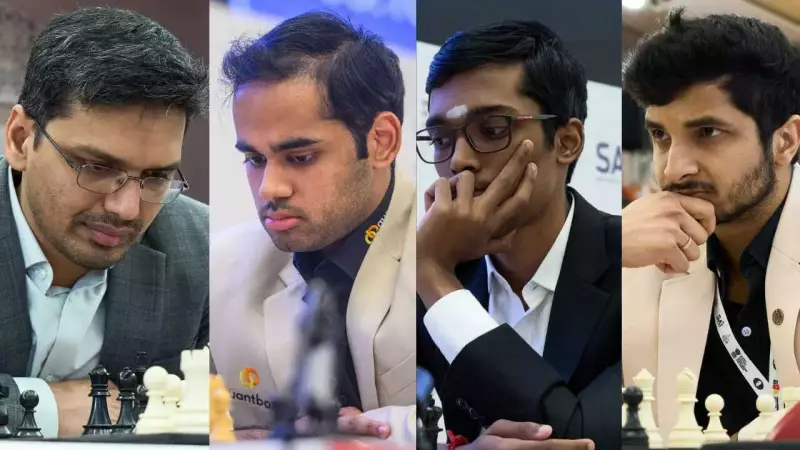
The FIDE World Cup 2025 in Goa was meant to be a triumphant homecoming for Indian chess, but it ended with a sobering reality check. While Uzbekistan's 19-year-old Javokhir Sindarov emerged as the youngest-ever World Cup winner, securing his spot in the 2026 Candidates tournament, the host nation watched its top contenders fall short of qualifying for the prestigious event.
The Unexpected Champion and India's Missed Opportunity
Javokhir Sindarov, a 19-year-old from Uzbekistan, created history by becoming the youngest World Cup champion, mirroring India's Divya Deshmukh's achievement in the women's event earlier this year. Entering the tournament as the 16th seed, Sindarov capitalized brilliantly on the knockout format, stringing together a dream run that ultimately earned him the title and a ticket to the 2026 Candidates, where he could challenge for D Gukesh's World Championship title.
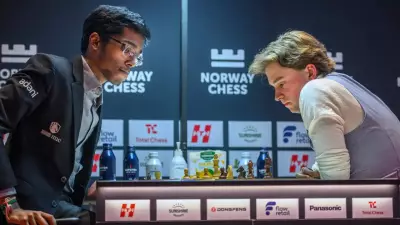
Yet beneath this global celebration lay profound disappointment for Indian chess. The country hosted the World Cup after 23 long years with a record 24 home players in the field, but not a single Indian managed to secure one of the top three qualifying spots for the Candidates. Arjun Erigaisi came closest before bowing out in the quarterfinals against China's Wei Yi, who eventually finished as runner-up.

Decoding India's World Cup Struggles
The knockout format of the World Cup proved particularly challenging for higher-rated players. As veteran Grandmaster Levon Aronian explained before the tournament, "It's just two classical games... quite often the sides that are not as highly rated will make a draw with white and wait for their chance with black. Everything can happen in one single game."
This structure favored lower-rated opponents, and India's top seeds weren't immune. Gukesh, Arjun Erigaisi, Pentala Harikrishna, Vidit Gujrathi, and Aravindh Chithambaram—all ranked within the world's top 25—were knocked out by lower-rated opponents, with the decisive loss consistently coming when they had the White pieces.
The Home Pressure Conundrum
Playing before a home crowd brought both comfort and immense pressure. Grandmaster Pranesh M acknowledged this challenge before the event, stating, "Of course, it attracts so much pressure, but I think I would've to get into a mindset where it doesn't affect my chess." In a sport where calmness is essential, the emotional weight of home expectations proved difficult for many Indian players to manage effectively.
Motivation and Preparation Gaps
Veteran Grandmaster Pravin Thipsay highlighted another crucial factor: motivation levels. "For many top Indians, having multiple routes to Candidates' qualification works as a safety net, whereas there is no such thing for others," he explained. "So one could say that the common player is more motivated in this particular tournament."
There were bright spots for India, with Diptayan Ghosh upsetting Ian Nepomniachtchi early in the tournament, and Pranav V, SL Narayanan, and Harikrishna making deep runs. However, consistency in the chaotic knockout format ultimately eluded them.
The Engine Problem: Creativity vs. Calculation
A growing concern within Indian chess revolves around over-reliance on artificial intelligence and chess engines. Grandmaster Vidit Gujrathi recently noted, "Now everybody has the best engines and powerful hardware, so there's very little that separates one player from another... Earlier, it wasn't like that—you had to sit for hours, work through lines, go deeper yourself."
This dependence on engine preparation may be stifling creative play. As Thipsay questioned, "Are we really thinking about chess? Are we playing creative chess ourselves? Do we know where we end our preparation?" Both in the Women's World Cup and the men's event in Goa, those who prioritized creativity over engine-perfect play ultimately triumphed.

Despite the disappointment, hope remains for Indian chess. R Praggnanandhaa is closing in on securing the final Candidates spot available through the FIDE Circuit, which would ensure at least one Indian representation in the 2026 Candidates tournament. The number could well have been higher, but as the dust settles on the Goa World Cup, the Indian chess community is left with valuable lessons for future competitions.