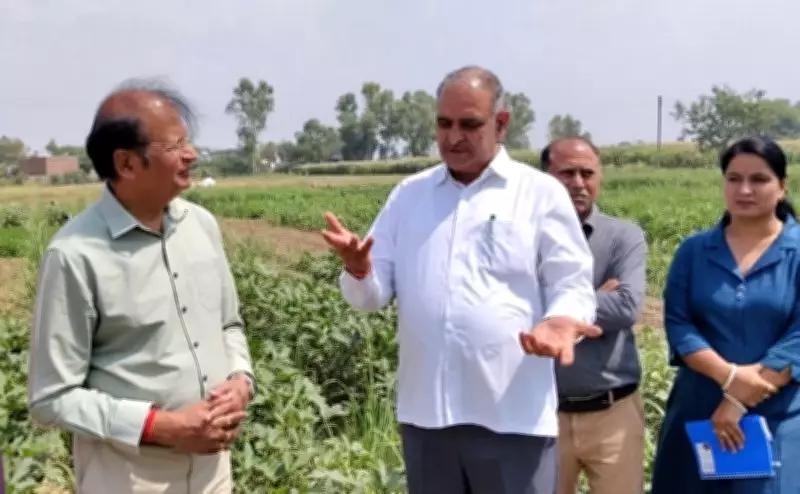
The Vice-Chancellor of Haryana Agricultural University (HAU) has highlighted the potential of intercropping in sugarcane cultivation to significantly enhance farmers' income. Speaking at a recent event, the VC emphasized that adopting intercropping methods can not only boost profitability but also improve soil health and promote sustainable farming practices.
Benefits of Intercropping
Intercropping involves growing two or more crops simultaneously on the same piece of land. In sugarcane fields, farmers can plant short-duration crops such as pulses, oilseeds, or vegetables between the rows of sugarcane. This practice allows for efficient use of resources like water, sunlight, and nutrients, leading to higher overall productivity.
The VC noted that intercropping provides additional income from the secondary crop without compromising the main sugarcane yield. It also helps in weed suppression, reduces pest infestation, and enhances soil fertility through biological nitrogen fixation when legumes are used.

Economic and Environmental Impact
According to HAU experts, intercropping can increase farmers' net returns by 20-30% compared to sole cropping of sugarcane. The practice also reduces the risk of crop failure due to adverse weather conditions, as the secondary crop can compensate for any loss in the main crop.
From an environmental perspective, intercropping promotes biodiversity, reduces soil erosion, and minimizes the need for chemical fertilizers and pesticides. This aligns with the government's push for sustainable agriculture and doubling farmers' income by 2022.
Government Initiatives and Support
The Haryana government has been promoting intercropping through various schemes and subsidies. Farmers are provided with training and technical support to adopt best practices. The VC urged farmers to take advantage of these initiatives and integrate intercropping into their sugarcane cultivation.
Research conducted at HAU has identified suitable crop combinations and management practices for different agro-climatic zones in Haryana. The university is also developing high-yielding varieties of sugarcane that are compatible with intercropping systems.
Challenges and Solutions
Despite the benefits, the adoption of intercropping faces challenges such as lack of awareness, inadequate access to quality seeds, and labor-intensive management. The VC called for collaborative efforts from agricultural extension services, financial institutions, and farmers' cooperatives to address these issues.
He also emphasized the need for policy support to ensure that intercropping is integrated into mainstream agricultural planning. With proper implementation, intercropping in sugarcane can be a game-changer for small and marginal farmers in Haryana.
In conclusion, the HAU VC's advocacy for intercropping underscores its potential to transform sugarcane farming into a more profitable and sustainable enterprise. By adopting this practice, farmers can not only increase their income but also contribute to the long-term health of their land.