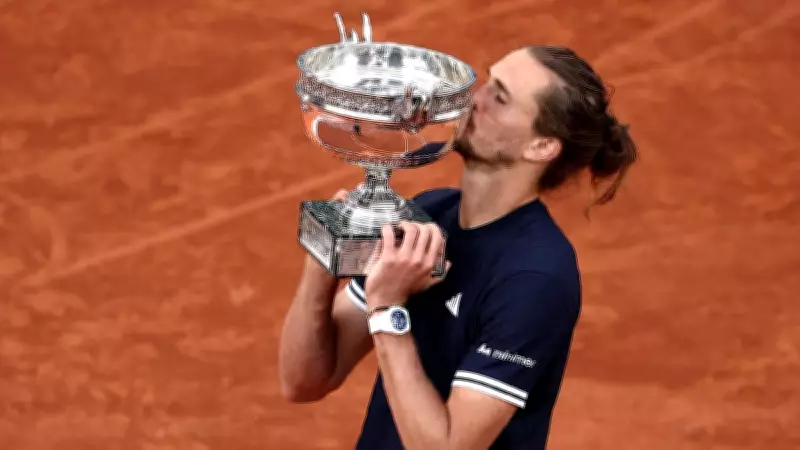
Alexander Zverev has ended a five-year drought for the '90s generation in men's tennis by winning the French Open title at Roland Garros. The German star's triumph makes him only the third player born in the 1990s to secure a Grand Slam singles championship, following Daniil Medvedev's victory at the US Open in 2021.
A Long-Awaited Victory for the '90s Generation
Zverev's victory marks a significant milestone for players born in the 1990s, a group often referred to as the 'lost generation' due to their struggle to break the dominance of the 'Big Three'—Roger Federer, Rafael Nadal, and Novak Djokovic. Since Medvedev's triumph in New York, no other 90s-born male player had won a major until Zverev's breakthrough in Paris.
Zverev's Path to Glory
The 29-year-old German displayed remarkable resilience throughout the tournament, overcoming tough opponents in the latter stages. In the final, he showcased his powerful serve and aggressive baseline game to secure a straight-sets victory. This win not only adds a Grand Slam title to his resume but also silences critics who questioned his ability to perform under pressure on the biggest stage.

Zverev's victory is particularly notable given the recent dominance of younger players, including Carlos Alcaraz and Jannik Sinner, who have already captured multiple major titles. The win reasserts the competitiveness of the 90s generation and proves that experience and perseverance can still triumph in the modern era.
Historical Context
Before Zverev, only two other 90s-born players had won men's singles Grand Slam titles: Daniil Medvedev (born 1996) and Dominic Thiem (born 1993). Thiem won the US Open in 2020, while Medvedev claimed his first major in 2021. Zverev now joins this exclusive club, ending a five-year gap since a 90s-born player last lifted a Grand Slam trophy.
The German's success also highlights the shifting landscape of men's tennis, where the 'Big Three' era is gradually giving way to a new generation. With Nadal and Federer nearing retirement, and Djokovic still competing at a high level, Zverev's win signals that the 90s generation is far from finished.
Reaction and Future Prospects
Following his victory, Zverev expressed relief and joy, dedicating the win to his team and family. He acknowledged the long wait for a 90s-born champion and hopes his success inspires others from his generation. Looking ahead, Zverev aims to build on this momentum and contend for more major titles in the coming years.
The tennis world has praised Zverev's achievement, with many noting that his win adds depth to the men's game. As the sport transitions, the competition between generations promises to deliver more thrilling moments for fans worldwide.