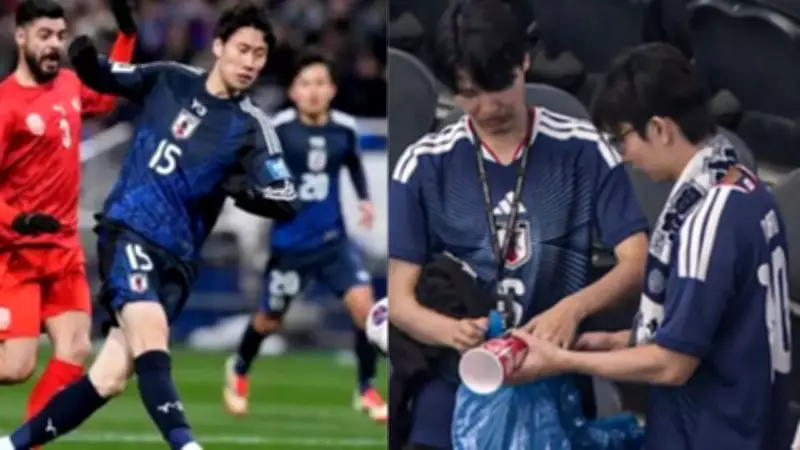
Japanese football supporters once again captured global attention during the 2026 FIFA World Cup. After Japan’s 2-2 draw against the Netherlands, fans wearing national team jerseys stayed back in the stands and collected trash into bags before leaving. ESPN FC shared a photo of the scene on social media, bringing renewed focus to a tradition that Japanese supporters have followed at major international tournaments for years. The act received praise from football fans around the world.
Japan fans continue their respected World Cup tradition
The image shared by ESPN FC showed Japanese supporters carefully picking up cups, wrappers, and other waste from their section of the stadium. While most spectators were leaving after the match, these fans remained behind to ensure the area was clean. This is not a new practice. Japanese supporters have become known for doing the same thing at World Cups and other international events. The habit reflects values deeply connected to Japanese culture, including respect for shared spaces, discipline, and responsibility. What stood out once again was that the gesture had nothing to do with the result on the field. Japan had just finished a hard-fought 2-2 draw against the Netherlands, yet the fans followed the same routine they have shown at tournaments across different countries.
ESPN FC photo highlights sportsmanship beyond Japan vs Netherlands draw
After ESPN FC posted the picture online, many football followers praised the supporters for setting a positive example. Comments focused on the respect shown toward stadium workers and fellow spectators. The reaction was not based on objectives, strategy, or tournament results. Instead, people focused on one simple gesture that many felt best captured the finest side of sports culture. These moments stand out because they demonstrate that football is not only about the 90 minutes of a game. Fans also help shape the atmosphere around the match. Many spectators found the picture to be yet another reminder of why Japanese fans are respected at world competitions. Long after the final whistle, they impressed once more not by celebrations or slogans but by a small gesture of respect that spoke for itself.