Toni Nadal Questions Alcaraz's Omission of Former Coach After Historic Australian Open Victory
Spanish tennis sensation Carlos Alcaraz has made history by becoming only the second Spanish player to win the Australian Open, following in the footsteps of Rafael Nadal. However, his victory speech has sparked controversy, drawing criticism from tennis legend Toni Nadal, uncle and former coach of Rafael Nadal.
Historic Achievement Overshadowed by Coaching Controversy
With his impressive 2-6, 6-2, 6-3, 7-5 victory over Novak Djokovic in the Australian Open final, world number two Carlos Alcaraz achieved what only one other Spanish player had accomplished before him. Rafael Nadal first claimed the Australian Open title in 2009 before securing it again in 2022, making Alcaraz's win particularly significant for Spanish tennis.
What made the moment even more remarkable was Alcaraz's achievement of becoming the youngest man to win all four Grand Slam singles titles, breaking American Don Budge's 88-year-old record. The 21-year-old Spaniard now joins an elite group of just six men who have completed the career Grand Slam in the Open Era, alongside tennis greats Rafael Nadal, Roger Federer, Novak Djokovic, Andre Agassi, and Rod Laver.

The Coaching Transition That Raised Eyebrows
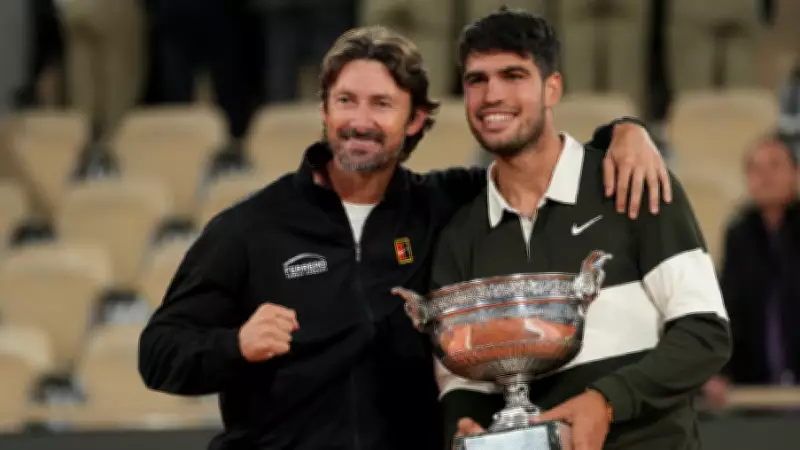
Alcaraz's triumph came just months after his surprising split with long-time coach Juan Carlos Ferrero, with whom he had worked since he was 15 years old. The young champion now trains under Samuel Lopez, but it was his failure to acknowledge Ferrero during his victory speech at Rod Laver Arena that caught the attention of tennis observers.
Toni Nadal, speaking with Spanish radio channel RadioEstadio, expressed his disappointment with Alcaraz's omission. "It's great to praise your coach, but you have to remember the other one too," Nadal stated. "I don't know how his relationship with Ferrero ended, but when he says that, I hate to say it. I'm sure Samuel López has done a great job in these two months, but he can't forget Ferrero's work over the years."
Drawing Parallels to Rafael Nadal's Career
Toni Nadal drew a personal comparison to emphasize his point, noting how he would have felt if his nephew Rafael had failed to acknowledge his current coach Carlos Moyá after their own coaching relationship ended. "I wouldn't have liked it if Rafa had said that about Carlos Moyá when I left," shared the respected tennis figure.
The significance of Ferrero's contribution to Alcaraz's career cannot be overstated. During their seven-year partnership, Alcaraz won an impressive six Grand Slam titles, transforming from a promising teenager into a world-class champion. Their collaboration saw Alcaraz rise to the pinnacle of tennis, achieving what many players spend entire careers pursuing.
The Emotional Split That Preceded the Victory
When Alcaraz announced his split with Ferrero in December, he did so with evident emotion. In a heartfelt statement, he acknowledged Ferrero's crucial role in his development: "After more than seven years together, Juanki (Juan Carlos Ferrero) and I have decided to end our time together as coach and player. Thank you for turning my childhood dreams into reality."
Alcaraz continued, emphasizing the personal growth he experienced under Ferrero's guidance: "You've helped me grow as an athlete, but above all, as a person. And something I value immensely: I've enjoyed the process. That's what I'll take with me, the journey we've shared."
Ferrero responded with equal grace, expressing both nostalgia and pride in their shared journey: "Today, a very important chapter of my life comes to an end. I close it with nostalgia, but also with pride and excitement for what may come next. Thank you, Carlos, for the trust, the effort, and for making your way of competing make me feel so special."
Unresolved Issues Behind the Separation
In the days following their separation, Ferrero hinted at underlying issues that might have contributed to their decision to part ways. Speaking to Spanish sports newspaper Marca, he suggested: "Perhaps they could have been resolved if we had sat down to talk, but in the end, we didn't, and we decided not to continue."

This revelation adds complexity to the situation, suggesting that the coaching relationship may have ended with unresolved matters between the two.
The Broader Implications for Tennis Relationships
Toni Nadal's comments highlight an important aspect of professional tennis relationships—the acknowledgment of those who contributed to an athlete's success, even after partnerships have ended. In a sport where coaching relationships can be intense and deeply personal, how athletes handle transitions speaks volumes about their character and respect for the sport's traditions.
As Alcaraz continues his career under new guidance, the question remains whether he will publicly acknowledge Ferrero's foundational role in his development. The young champion's response to this criticism may shape how future generations view the importance of honoring past mentors in tennis.
What remains undeniable is Alcaraz's extraordinary achievement in Melbourne—a victory that cements his place among tennis legends while simultaneously raising questions about how champions should acknowledge those who helped them reach the summit.