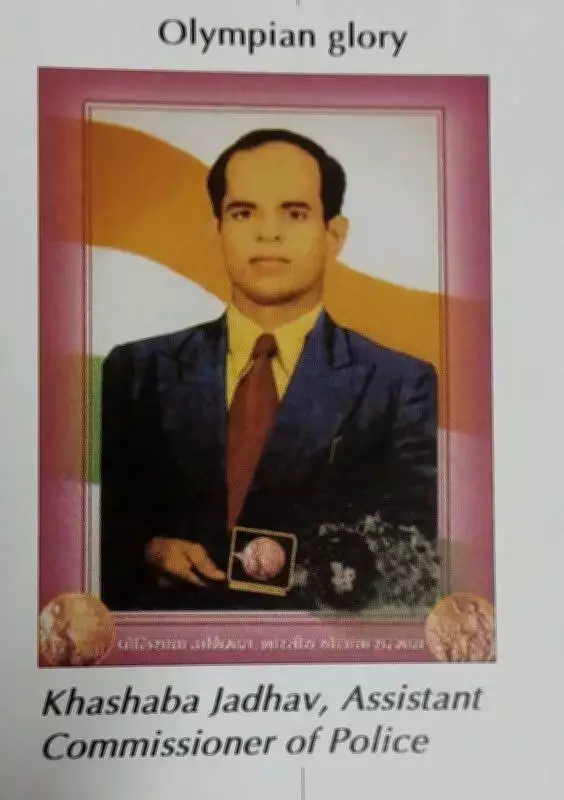
Bombay High Court Sets Deadline for Padma Vibhushan Decision on Khashaba Jadhav
The Bombay High Court's Kolhapur bench has issued a significant directive to the central government, mandating it to "take an appropriate decision on or before May 4" regarding the posthumous conferral of the Padma Vibhushan award upon wrestling icon Khashaba Jadhav. Jadhav holds the historic distinction of being India's first individual Olympic medalist.
Court's Clear Instructions and Next Hearing
On April 15, a bench comprising Justice Madhav Jamdar and Justice Pravin Patil delivered this order while hearing a Public Interest Litigation (PIL). The court explicitly stated, "The State Government, if required, to comply with any requirements expeditiously." The matter has been scheduled for its next hearing on May 5, following the government's deadline.
The bench firmly acknowledged the undisputed fact that Khashaba Dadasaheb Jadhav is India's inaugural individual Olympic medalist. This recognition came during proceedings for a PIL filed by the Kusteeveer Khashaba Jadhav Foundation, an organization established by the legendary wrestler's son, Ranjeet Jadhav, after his father's passing in 1984.

Details of the Public Interest Litigation
The PIL specifically seeks directions from the High Court to the Union of India, represented through the Ministry of Home Affairs' Padma Awards Cell. It calls for consultation with the Padma Award Committee, which is also named as a party in the litigation. The petition urges authorities to reconsider and decide afresh on the representations, nominations, and recommendations made for the posthumous conferment of Padma Vibhushan upon Khashaba Jadhav.
This reconsideration must align strictly with the legal framework and official criteria governing the prestigious Padma Awards. Ranjeet Jadhav has tirelessly pursued this recognition for his father for years, navigating various bureaucratic channels without success. The issue has also garnered parliamentary attention, with several Members of Parliament raising it in legislative sessions.
Historical Context and Award Controversy
The petitioner's argument centers on a critical point: Khashaba Jadhav was previously denied a Padma award due to a rule stipulating that posthumous awards are typically granted within one year of the recipient's death. However, Jadhav's legacy presents a unique case. He was posthumously honored with the Arjuna Award in 2001, nearly 17 years after his death and approximately 51 years after his monumental achievement at the 1952 Helsinki Olympic Games, where he secured a bronze medal.
Jadhav's Olympic feat was truly extraordinary. For 44 years after his victory, no other Indian athlete won an individual Olympic medal. This drought ended when Leander Paes claimed a bronze in tennis. It wasn't until the 2008 Beijing Olympics that wrestler Sushil Kumar became the second Indian wrestler to earn an individual Olympic medal, further highlighting Jadhav's pioneering role in Indian sports history.
The court's intervention now places the matter squarely before the central government, with a firm deadline to address this long-standing recognition issue for a national sports hero.