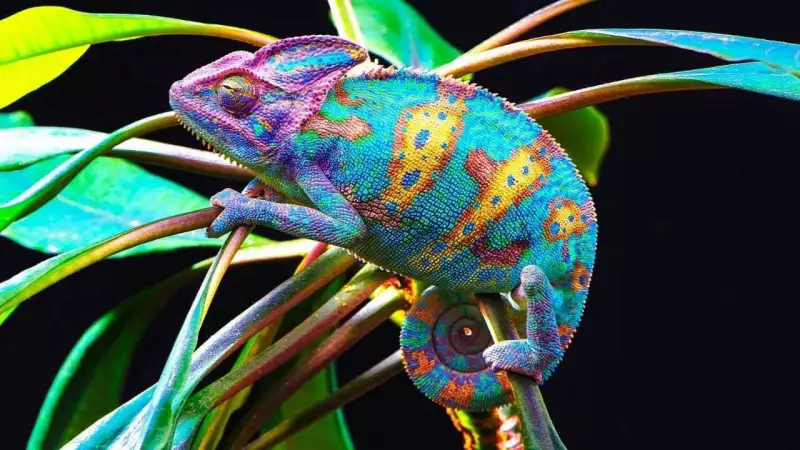
For generations, the chameleon's incredible ability to shift its skin colour has captivated imaginations, often being mistaken for simple magic or perfect camouflage. However, the truth behind this transformation is a fascinating blend of biology, physics, and behaviour, serving purposes far beyond blending in.
The Cellular Magic: Iridophores and Reflected Light
The secret lies not in pigments or paint, but within specialised cells in the chameleon's skin. These cells, called iridophores, act like tiny, adjustable mirrors. They contain nanocrystals that reflect light. By changing the spacing between these crystals, the chameleon alters how light wavelengths are reflected, creating the visible shift in colour. This scientific process can happen in seconds, producing a spectrum from vibrant greens and yellows to deep reds and dark browns.
Colour as a Language: Mood, Temperature, and Communication
Contrary to popular belief, matching the environment is a secondary function. A chameleon's colour is primarily a dynamic dashboard of its internal state.

Emotions dictate a significant colour shift. Bright, bold colours like lime green, yellow, or turquoise often signal excitement, aggression, or a display of dominance. Conversely, darker, muted tones can indicate fear, stress, or submission. This rapid colour change is a crucial non-vocal communication tool, especially during encounters with rivals or potential mates.
Being cold-blooded, chameleons also use colour for thermoregulation. When they need to warm up, their skin darkens to absorb more heat from sunlight. When too hot, they shift to lighter shades to reflect sunlight and cool down. This is a vital survival mechanism for maintaining their body temperature.
Beyond Camouflage: The Expressive Reptile
While their natural base colour provides some camouflage, the active colour change is less about invisibility and more about expression. Males use brilliant displays to assert dominance and attract females. Females, in turn, may change colour to signal their readiness to mate or to reject advances. This colour-coded language helps prevent unnecessary conflicts in the wild.
The chameleon's ability is a natural superpower that seamlessly merges physics with biology. It protects them, helps them communicate complex messages, and regulates their health. Understanding this process reveals that nature often engineers solutions more incredible than any magic, reminding us of the hidden wonders in the animal kingdom.