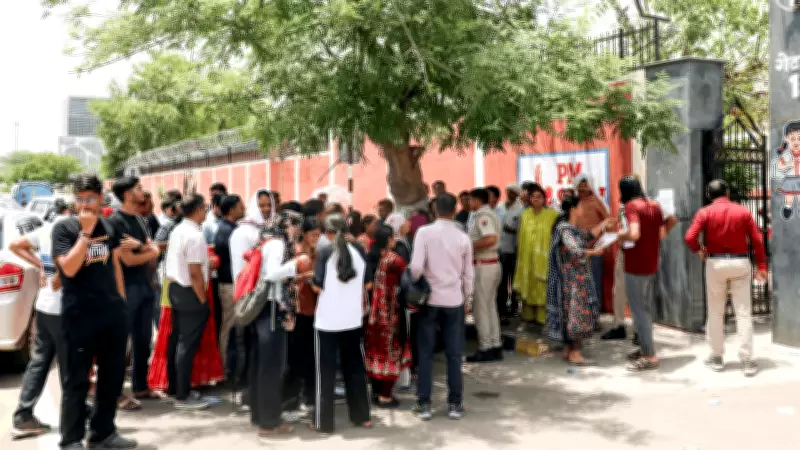
When lakhs of medical aspirants sit for the NEET-UG re-test this Sunday, June 21, they will walk into an exam system being guarded far beyond the usual frisking and identity checks. After the May 3 exam was scrapped following a multi-state paper leak, the government and the National Testing Agency (NTA) are trying to ensure that the re-test does not become another embarrassment — and have built what officials describe as the most tightly secured NEET exercise yet.
1. Securing Question-Setting Process
The NTA has tightened the question-setting process by involving multiple teams working in isolated environments. All question paper setters are under strict surveillance, and their communication is monitored to prevent any leak.
2. Digital Encryption of Papers
Question papers are now encrypted using advanced algorithms. The decryption keys are only provided at the last moment to authorized personnel at test centers.

3. GPS Tracking of Paper Transport
All vehicles transporting question papers are fitted with GPS trackers. Their routes are monitored in real-time by a central control room.
4. Biometric Verification of Candidates
Every candidate will undergo biometric verification – fingerprint and photograph – at the test center. This ensures no impersonation.
5. Jammers at Test Centers
Mobile signal jammers and Wi-Fi blockers are installed at all test centers to prevent any electronic cheating.
6. CCTV Surveillance
High-definition CCTV cameras are placed in every examination hall. The footage is live-streamed to NTA headquarters.
7. Randomization of Question Sets
Multiple question sets are used, and they are randomly distributed among candidates. The order of questions and options is also shuffled to prevent copying.
8. Strict Frisking
Candidates are frisked thoroughly before entry. Items like electronic devices, watches, and even certain types of clothing are banned.
9. Observer Deployment
Government observers are deployed at each test center. They have the authority to intervene if any irregularity is noticed.
10. Quick Response Teams
Quick response teams from law enforcement are stationed near test centers to handle any untoward incidents.
11. Post-Exam Analysis
After the exam, data analytics are used to detect any abnormal patterns in candidate performance, which could indicate cheating.
The NTA has assured that these measures will ensure a fair and transparent examination. Candidates are advised to follow all guidelines and report any suspicious activity to the authorities.