In nature, camouflage is a vital survival tool. While many animals use it, snakes are among the most adept at blending into their surroundings. Some mimic sand, leaves, tree bark, or dead leaves with remarkable precision. Here are seven snakes that are masters of disguise.
Gaboon Viper – Master of Leaf Litter
The Gaboon viper, one of Africa's largest venomous snakes, is a masterpiece of imitation. Its coloration mimics fallen leaves on the forest floor of savannas and rainforests. It remains motionless for long periods, making it nearly indistinguishable from leaf litter until prey approaches.
Copperhead – Disappearing in Dry Leaves
Copperheads are found in forests and wooded areas. Their hourglass-like patterns help them blend into dry leaves. This camouflage protects them from predators and aids in catching small mammals.

Green Tree Python – Imitating Vegetation
Unlike ground-dwelling snakes, the green tree python blends into tree branches. Its unique green coloration makes it indistinguishable from surrounding vegetation, allowing it to ambush birds, lizards, and small mammals.
Horned Desert Viper – Almost Invisible in Sand
Adapted to arid deserts, the horned desert viper has sandy colors and can partially bury itself in the sand. Only its eyes remain visible, creating perfect camouflage for hunting.
Eyelash Viper – Changing Colors to Suit the Environment
This snake displays a wide range of colors—green, yellow, brown, pink, or reddish—depending on its location. Its patterns mimic leaves, moss, or flowers, helping it hide among vegetation.
Puff Adder – Master of the Forest Floor
The puff adder, a viper, combines blue, brown, yellow, and black patterns to vanish in grasslands and forest floors. When threatened, it stays still and relies on its disguise.
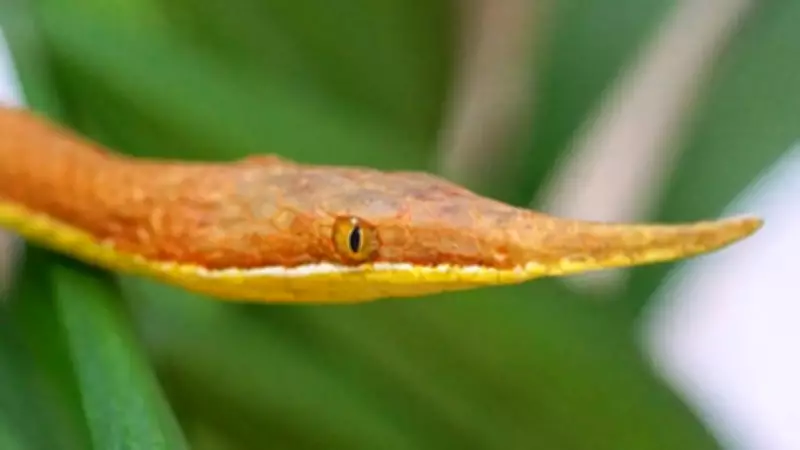
Leaf-Nosed Snake – Masterpiece of Evolution
The leaf-nosed snake has a unique leaf-like protrusion on its nose, making its entire body resemble a dead leaf. This allows it to hide among leaf litter and become completely indiscernible.