DNPA Conclave 2026 Sets Stage for Digital Journalism Transformation
The Digital News Publishers Association (DNPA) Conclave 2026 successfully convened a distinguished assembly of leaders from media, technology, and policy sectors to engage in critical deliberations regarding the future trajectory of journalism within an increasingly intricate digital environment. Held under the compelling theme “Rewriting the Playbook for a Resilient Digital Future,” the event placed a sharp focus on pivotal issues including audience trust, technological innovation, artificial intelligence integration, regulatory frameworks, and pathways to sustainable economic growth. This gathering signifies a decisive and transformative moment for India's dynamic digital news ecosystem, addressing both immediate challenges and long-term strategic directions.
Keynote Address: Investment and Trust in Digital News
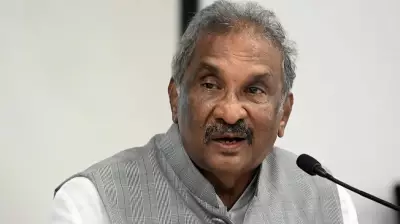
The session commenced with a keynote address delivered by Sunil Kant Munjal, Chairman of Hero Enterprises. Munjal provided a thorough examination of why long-term capital investment remains notably limited for digital news networks. He characterized the sector as relatively nascent yet fundamentally critical in shaping contemporary information distribution and public discourse. A central pillar of his address was the assertion that building and maintaining trust with audiences is absolutely fundamental to organizational longevity and relevance.
From an investor's perspective, Munjal strongly highlighted the paramount importance of developing diversified revenue streams. He posed critical questions about whether digital news companies remain overly dependent on traditional advertising models or are proactively exploring and implementing robust alternatives such as subscription services, premium content, and live events. Furthermore, he observed a dramatic shift in investor philosophy over the past two decades, with a much greater emphasis now placed on backing enterprises that demonstrate sustainable, scalable, and ethically sound business models.

Panel One: Digital News in the Modern Media Equation
The first panel discussion, titled “From reach to results, influence vs performance: Where does digital news fit in the new media equation?” meticulously examined the role of digital news through the analytical lens of advertising and media agencies. The panel featured esteemed experts:
- Ashwin Padmanabhan (WPP Media)
- Kartik Sharma (Omnicom Media Group India)
- Vinod Thadani (Dentsu Media & iPROSPECT)
- Santosh P Kumar (Innocean India)
The session was adeptly moderated by Hemant Jain of Lokmat Media Group, who initiated the dialogue by questioning whether the industry is currently grappling with a fundamental perspective problem, a product problem, or a measurement problem.
Kartik Sharma pointed directly to measurement frameworks, arguing they require a much sharper and more consistent focus. He highlighted that many clients and advertisers still predominantly purchase media based on simple impression counts, suggesting the industry must move decisively towards more sophisticated and defined target reach metrics to achieve better, more accountable outcomes. Vinod Thadani expanded on this, noting that the term “performance” carries vastly different meanings depending on the specific publisher and context, indicating that a lack of standardized definitions continues to be a significant challenge for the ecosystem.
Panel Two: Monetization and Credibility in the AI Age
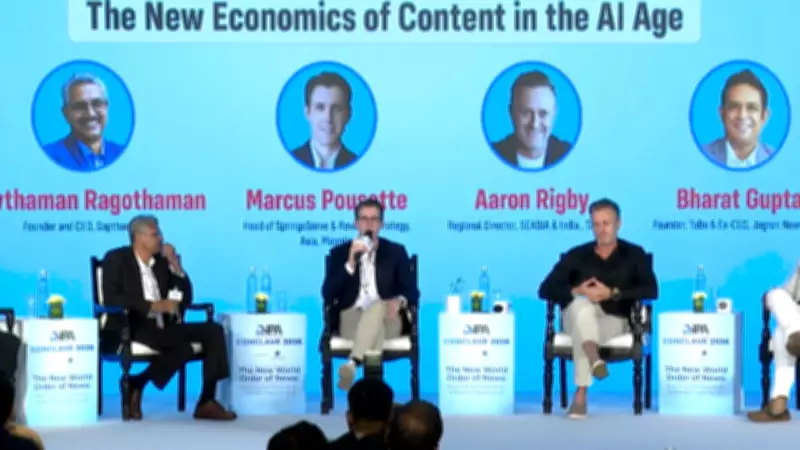
The second panel, titled “The new economics of content in the AI age,” delved into the complex interplay between monetization strategies and content credibility amidst rapid and disruptive technological change. This discussion featured a diverse group of specialists:

- Toshit Panigrahi (TollBit)
- Gowthaman Ragothaman (Saptharushi)
- Marcus Pousette (Magnite)
- Aaron Rigby (Taboola)
- Bharat Gupta (ToBe & former CEO, Jagran New Media)
The session was moderated by Puneet Jain, CEO of HT Digital. While the panelists unanimously acknowledged that artificial intelligence is actively disrupting traditional content and business models, they also concurred that it presents unprecedented opportunities to creatively redefine content creation, personalization, and distribution.
In response to a direct question on whether AI-led monetization could generate significant revenue within the next 12 months, Gowthaman Ragothaman offered a note of caution, suggesting that a one-year timeframe may be too short for making firm or sweeping predictions in such a rapidly evolving field. Bharat Gupta provided crucial context, emphasizing that the entire digital content ecosystem has evolved from simpler paradigms of content discovery and user engagement to far more complex monetization pathways. He urged publishers to be agile, adapt continuously, and fundamentally redefine their production and distribution strategies in direct response to these rapidly changing discovery mechanisms and consumer behaviors.
The DNPA Conclave 2026 ultimately served as a vital platform for cross-sector dialogue, setting a collaborative agenda focused on innovation, sustainability, and trust as the cornerstones for the next era of digital journalism in India.