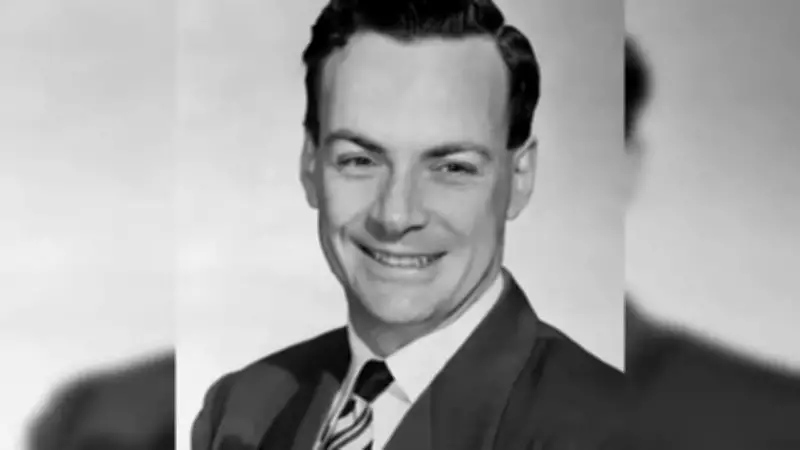
Richard Feynman, the Nobel Prize-winning physicist, spent much of his life challenging the notion that great achievements belong only to geniuses. He was an ordinary person who studied hard, he insisted, and there are no miracle people. Feynman became one of the most influential scientific thinkers of the twentieth century, yet he repeatedly argued that curiosity, persistence, and honest thinking mattered more than natural talent.
The Core Habit: Explaining in Plain Language
Behind Feynman's reputation was a remarkably simple daily learning habit: forcing himself to explain ideas in plain language until he truly understood them. Long before psychologists identified the most effective learning techniques, Feynman was unknowingly practising them. Today, research in cognitive science suggests that his approach remains one of the most powerful methods for improving memory, deepening understanding, and developing lifelong learning skills.
Curiosity Over Memorisation
According to an edited transcript of an interview with Feynman made for the BBC television program Horizon in 1981, his philosophy of learning was rooted in curiosity rather than memorisation. He famously advised: 'Study hard what interests you the most in the most undisciplined, irreverent and original manner possible.' Feynman viewed himself as a 'one-sided person' who simply applied a 'limited intelligence' with great intensity in a specific direction.

Instead of collecting facts, Feynman constantly tested whether he genuinely understood a subject. His habit was deceptively simple: take a concept, explain it using ordinary language, identify gaps in understanding, then return to the material until those gaps disappeared. This approach later became known as the Feynman Technique. Although the name emerged after his death, the principle appears throughout his lectures, notebooks, and interviews.
For Feynman, knowledge was only useful if it could be communicated clearly. As he explained in The Pleasure of Finding Things Out: 'I learned very early the difference between knowing the name of something and knowing something.'
Understanding vs. Naming
His father taught him that knowing the name of a bird in multiple languages tells you 'absolutely nothing whatever about the bird' itself. Instead, he was taught to notice things, such as the way a ball moves in a wagon, and to translate complex information into a reality he could visualise. That distinction became the foundation of his daily learning practice.
Intellectual Honesty: The Key to Deeper Learning
Feynman's learning habit was inseparable from a commitment to intellectual honesty. Rather than protecting his ego, he actively searched for weaknesses in his understanding. As stated by the National Museum of Nuclear Science & History: 'You see, I have the advantage of having found out how hard it is to get to really know something, how careful you have to be about checking the experiments, how easy it is to make mistakes and fool yourself.'
This mindset transformed every explanation into a test. If an idea seemed confusing when expressed simply, Feynman assumed the problem was not the explanation but his own understanding. Research supports this approach. Psychologists Leonid Rozenblit and Frank Keil demonstrated what they called the 'illusion of explanatory depth', showing that people often believe they understand a subject until they are asked to explain it in detail. Their findings mirror Feynman's method almost perfectly. Explaining ideas exposes hidden gaps in knowledge, creating opportunities for genuine learning rather than superficial familiarity.
Modern Science Validates Feynman's Method
Many years later, cognitive psychologists established that most of the principles used by Feynman were excellent learning practices. In a scientific analysis published in Psychological Science in the Public Interest, self-explanations and retrieval practice were proven to increase long-term learning outcomes. The process of explaining information is better for improving one's knowledge base compared to reading through the content multiple times.

As Feynman himself learned, the principles which made him an expert were those he discovered through experience. Each time he explained something and looked at his own thinking critically and uncovered any flaws in his knowledge base, he was essentially training his mind through scientifically sound processes. He did this not to impress anyone; he did it to gain understanding.
A Timeless Lesson for the Information Age
Richard Feynman rejected the myth that success belongs only to extraordinary minds. His approach to learning was grounded in curiosity, simplicity, and relentless self-questioning. By explaining ideas in plain language and refusing to confuse recognition with understanding, he developed a method that remains remarkably relevant today. Modern cognitive science now confirms what Feynman practised throughout his life: the path to deeper knowledge is not memorisation but active understanding. In an age of endless information, his simple habit offers a timeless lesson: the people who learn best are often those most willing to admit what they do not yet know.