

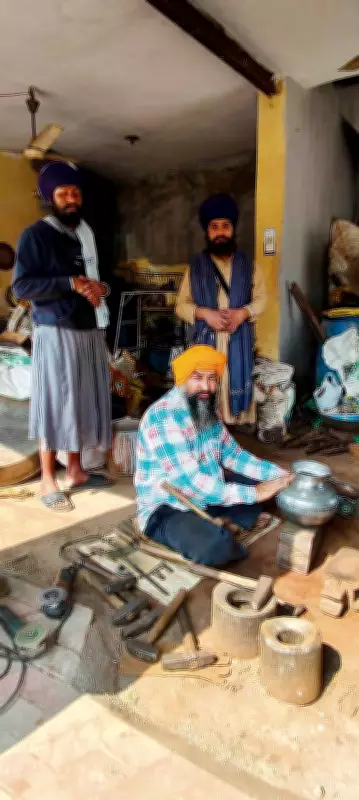
For centuries, Gharuan village in Mohali district of Punjab has been home to artisans who craft utensils from sarbloh, a material deeply rooted in Sikh tradition. Sarbloh, literally meaning 'all iron' or pure unalloyed iron, is actually an alloy of iron and carbon. With carbon content often less than 1 percent, it is considered pure and holds metaphorical significance in sacred texts, sometimes referring to God. In 1699, Guru Gobind Singh used a sarbloh bowl to prepare 'amrit' during the founding of the Khalsa.
What is Sarbloh?
In practical terms, pure iron is too soft for making durable utensils. The carbon in sarbloh adds essential hardness and tensile strength, ensuring cookware retains its shape during use. Metallurgically, sarbloh is classified as wrought iron. Its low alloy composition signifies purity, which is why it has been used in religious contexts.
Historical Use and Decline
Historically, sarbloh utensils were favored by mobile professionals due to their durability, heat retention, and versatility. Artisans crafted spatulas, cauldrons, iron plates (tava) for cooking, buckets, pots for water storage, and bowls and spoons for serving. Large degs were used for community cooking. These utensils were cheaper and more functional than those made from other metals and could be cleaned with sand.

In the second half of the 20th century, sarbloh utensils were largely replaced by cheaper, low-maintenance stainless steel and aluminum alternatives in Punjab. However, they have maintained steady patronage among Nihangs, the Sikh warrior order known as Guru Gobind Singh's beloved army. Nihangs continue to use sarbloh utensils as carriers of a sacred tradition, along with traditional weapons like swords, spears, and chakrams made from the same material.
Current State of the Craft
Today, around five families in Gharuan, comprising 18-20 craftsmen, are engaged in this craft. They employ traditional forging skills to shape iron sheets into small and large utensils for daily kitchen use and special congregations. Being handmade, production is limited, and artisans face competition from industrially manufactured alternatives. Despite challenges such as low remuneration, government apathy, and lack of recognition, these artisans persist in their generational craft.
The artisans of Gharuan deserve appreciation for struggling to keep their skills alive. Their work not only preserves a unique technique but also upholds a tradition that is integral to Sikh heritage. As the writer notes, the relentless pursuit of this craft despite adversities is commendable.






