

NEW DELHI: India is finalising its hub-and-spoke policy aimed at flying passengers between small towns and the rest of the world via major hubs such as Delhi, Mumbai, and Bengaluru. This initiative comes as Air India and IndiGo place massive orders for wide-body aircraft, Indian hub airports mature to handle domestic-to-international transfers, and major Gulf hubs like Dubai, Abu Dhabi, and Doha face uncertainty over resuming pre-February 28 operations.
Policy Implementation Begins
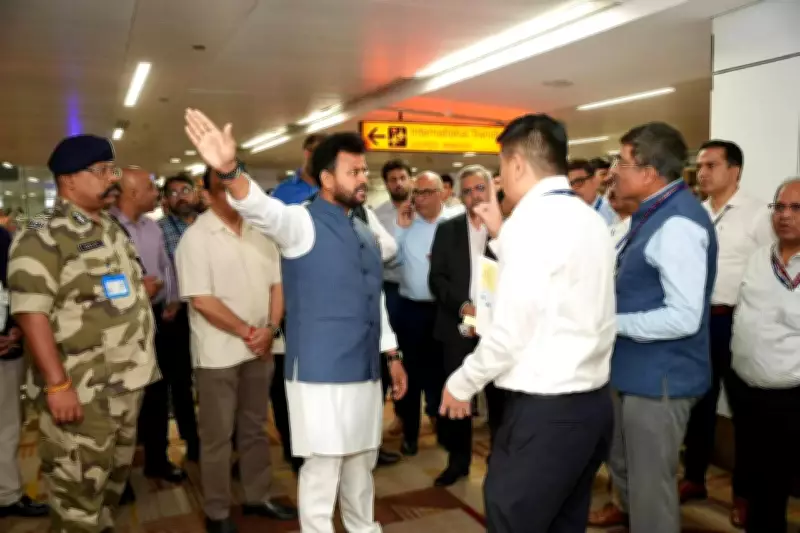
Union Aviation Minister Ram Mohan Naidu and Secretary Samir Sinha visited the upcoming hub at Delhi’s Indira Gandhi International Airport, India’s busiest airport, on Thursday to fine-tune the policy and accelerate its implementation.
Key Changes for Passengers
Sinha is addressing the most significant pain point for international-to-domestic passengers: the need to collect baggage upon arrival in India, clear customs, and then check in again for the domestic connecting flight. Under the new policy, the aviation ministry states that “baggage for both inbound and outbound international passengers will be transferred seamlessly through airside operations at the hub airport, eliminating the need for passenger intervention.”

For outbound passengers, such as those flying from Lucknow to Delhi to London, through-check-in of baggage at the origin airport will be possible if both flights are operated by the same airline or alliance code-share partners. The operating procedure for domestic-to-international transfers involves passengers from smaller cities being consolidated and routed through major hubs. At the spoke airport, passengers will receive two separate boarding passes marked with ‘D’ (domestic) and ‘I’ (international) indicators. Customs and immigration formalities for outbound passengers will be completed at the first point of exit, the spoke airport, and these passengers will not have access to customs declaration facilities during transit.
For inbound international-to-domestic transfers, customs and immigration processes will occur at the final point of entry, again the spoke airport. Baggage will be transferred seamlessly through airside operations at the hub, eliminating passenger intervention. To maintain operational efficiency, combination flights will not be permitted; separate aircraft will be used for domestic and international segments of hub-and-spoke operations.
Strategic Goals
Minister Naidu stated that India aims to enable seamless connectivity between Tier-II and Tier-III airports and international destinations. “While passengers will benefit from reduced travel time, there will also be optimal utilisation of infrastructure already developed across the country,” he said. The hub-and-spoke strategy seeks to transform India from a source market feeding foreign airlines and hubs into a “global transit hub, thereby allowing Indian airports to capture a substantial share of transfer traffic that is currently routed through foreign hubs.”
Naidu highlighted that “at present, nearly 35% of international passengers travelling from India transit through foreign hubs such as Dubai, London, and Singapore. Our aim is to reverse this trend by developing globally competitive Indian hubs like Delhi, Mumbai, Bangalore, Hyderabad, Kolkata, and Chennai.” He noted that Delhi Airport, with a capacity exceeding 10 crore passengers annually, handles nearly 50% of total passenger traffic in the northern region and manages around 50,000 daily transfers, positioning itself as a natural hub airport.
The implementation of this model “will also enable airlines to deploy their aircraft more efficiently for international operations, while contributing to decongestion at major airports by decentralising customs and immigration processes to spoke locations,” Naidu added.






