

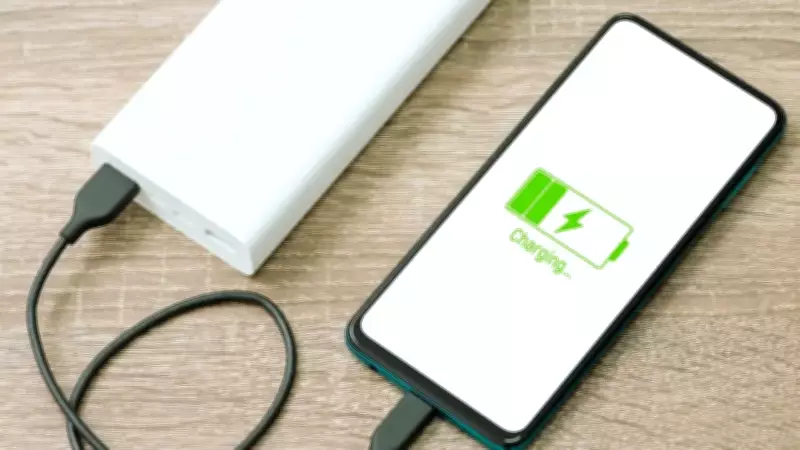
An IndiGo flight operating from Hyderabad to Chandigarh raised serious concerns about passenger safety this week after a fire broke out from a passenger's personal power bank moments after the aircraft touched down at Shaheed Bhagat Singh International Airport. According to multiple media reports, smoke emerged in the cabin post-landing when the power bank located in a passenger's baggage ignited. This prompted a rapid emergency evacuation using inflatable slides. Video footage captured at the airport showed passengers quickly exiting the aircraft as smoke filled the cabin.
Growing Concerns Over Lithium-Ion Batteries
The incident has once again highlighted the increasing dangers posed by lithium-ion batteries used in power banks, smartphones, laptops, and other portable electronic devices. As reported by The Wall Street Journal, aviation regulatory bodies and airlines worldwide have imposed stricter regulations for these devices following a surge in cabin fires in recent years.
Why Are Power Banks Potentially Dangerous on Board?
Despite widespread confusion online, power banks are generally not banned from hand baggage on commercial flights. In fact, international aviation standards require travellers to place power banks in their cabin baggage rather than in checked luggage. The reasoning is straightforward: in the event of a fire caused by the device, cabin crew can more easily address overheating batteries inside the cabin. It is far more challenging to extinguish fires in the cargo hold. The primary concern for regulators and airlines is the use of power banks during the flight itself.

The Threat of Thermal Runaway
The most serious risk associated with lithium-ion batteries is a condition known as "thermal runaway." In this scenario, a battery cell overheats, potentially leading to smoke, fire, or even an explosion-like event. Studies indicate that risks include manufacturing defects, internal short-circuits, mechanical damage, exposure to high temperatures, overcharging, or the use of counterfeit products. Thermal runaway causes a rapid rise in temperature that can spread to adjacent battery cells, making fires difficult to contain.
Aviation regulators worldwide are increasingly concerned about the number of electronic devices carried by passengers. There have been several instances of emergency landings and evacuations caused by overheated power banks and smartphones in recent years.
Regulatory Measures and Advisories
According to a report by Business Standard, India's Directorate General of Civil Aviation (DGCA) has issued advisories regarding the heightened fire hazards associated with lithium batteries. Airlines have begun advising passengers to refrain from using power banks during flights and to ensure they are easily accessible rather than stored in checked luggage or overhead bins. International airlines have also imposed stringent restrictions on the number of power banks passengers may carry or their usage while flying.
Safety Recommendations for Passengers
It is always advisable to carry genuine power banks from reputable manufacturers and to avoid using any damaged or swollen batteries. Passengers should never expose power banks to high temperatures. Additionally, it is recommended not to place power banks in seat pockets, as they may go unnoticed until they overheat. While some have called for a ban on power bank usage on flights following the Chandigarh incident, this remains a matter of opinion rather than an official regulatory decision. Current aviation guidelines continue to permit power banks in cabin baggage within specified battery capacity limits.






