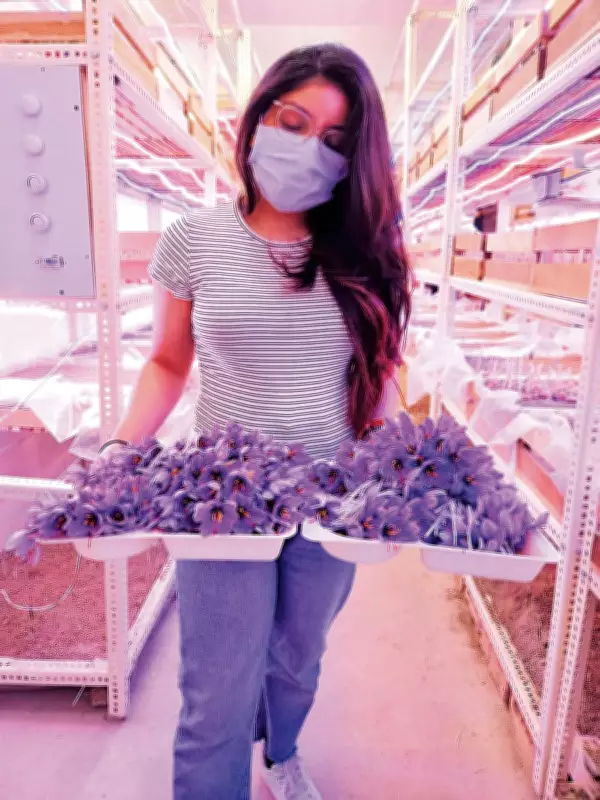
In a remarkable agricultural development, the prized Kashmiri saffron, known for its distinct aroma and color, is now being successfully cultivated in Phulawal village on the outskirts of Ludhiana. This breakthrough has been achieved through dedicated efforts by local farmers and agricultural experts who have adapted the cultivation techniques to the region's climate and soil conditions.
Successful Trial Brings Hope
The trial cultivation of saffron, which began last year, has yielded impressive results. The flowers have bloomed beautifully, producing high-quality saffron threads that match the standards of the original Kashmiri variety. This success has sparked excitement among farmers in the region, who see it as a potential new cash crop that could diversify their income sources.
Economic Potential for Local Farmers
Saffron is one of the most expensive spices in the world, and its cultivation in Punjab could significantly boost the local economy. The high market value of saffron, which can fetch up to several lakh rupees per kilogram, presents a lucrative opportunity for farmers. With proper support and training, many are optimistic about expanding saffron cultivation across the state.

Challenges Overcome The journey was not without hurdles. Saffron requires specific climatic conditions, including cold winters and dry summers, which are typical of Kashmir but not naturally abundant in Punjab. Farmers had to carefully manage irrigation, soil pH, and temperature to mimic these conditions. The success in Phulawal is a testament to the ingenuity and perseverance of the agricultural community.
Government and Expert Involvement The Punjab Agricultural University and local horticulture departments played a crucial role in providing technical guidance and resources. Their support helped farmers navigate the complexities of saffron farming, from bulb selection to harvesting.
Future Prospects
Encouraged by the results, plans are underway to expand saffron cultivation to other parts of Punjab. Training programs and workshops are being organized to educate more farmers about the techniques involved. If scaled successfully, this could reduce India's dependence on imported saffron and position Punjab as a new hub for saffron production.
Local farmer Jaspal Singh, who participated in the trial, expressed his delight: "We never thought we could grow Kashmiri saffron here. The quality is excellent, and the demand is high. This could change our lives."
The success story of Phulawal village is a shining example of agricultural innovation and resilience, offering a blueprint for diversification in the state's farming sector.