Media Leaders Debate Subscription Challenges at DNPA Conclave 2026
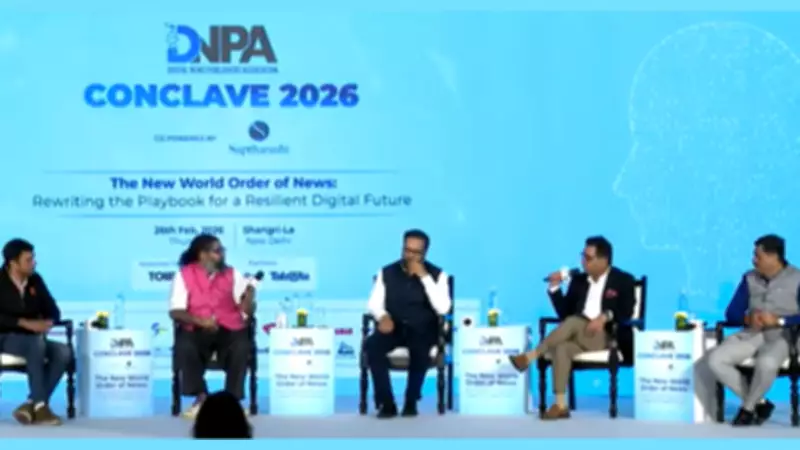
Leaders from media, technology, and policy sectors gathered on Thursday to map out the future of journalism in an increasingly digital world at the DNPA Conclave 2026. Organized under the theme “Rewriting the Playbook for a Resilient Digital Future,” the event sparked intense conversations about trust, innovation, artificial intelligence, regulation, and sustainable growth, laying the groundwork for deeper discussions on the structural issues confronting the industry.
The Reality of Indian User Payments
During the concluding panel discussion titled “Getting the Indian User to Pay,” executives from media, technology, and consumer platforms confronted a sobering truth: while subscriptions are widely viewed as a long-term goal for the industry, scaling them remains a complex challenge. Avinash Mudaliar, CEO of OTTPLAY, framed this struggle as fundamentally behavioral. He drew a sharp distinction between news and streaming platforms, arguing that the gap is more psychological than technological.
“OTTs solve for dopamine, news solves for cortisol,” Mudaliar observed, suggesting that entertainment platforms are built around reward cycles. “You're not literally craving attention; we are craving retention. That’s the bus we seem to be missing.”

He noted that OTT platforms simplify sampling for users. “News makes sampling so tough. If you read two articles, the third asks you to pay. OTT has it simple — sample for a month, watch multiple episodes, then decide whether to stay.” Mudaliar also questioned the idea that video-led news subscriptions alone could drive growth, pointing to the ad-supported success of platforms like YouTube. “News OTT won't work unless you approach it differently — with focus on the story, not just information.”
Lessons from Consumer Platforms
From a consumer-platform perspective, Anurag P, VP Product at Swiggy, shared insights from SwiggyOne’s subscription model. “We’re not selling free deliveries; we’re selling mental bandwidth to users,” he said, highlighting the critical importance of reducing user friction.
“How do you make the whole process friction-free?” he explained was the central question, adding that publishers must identify where friction arises in news consumption, such as rigid paywalls or overwhelming content abundance.
The panel agreed that subscriptions require flexibility. Mudaliar emphasized experiments with pause features. “We introduced a pause. If you’ve taken a yearly subscription but want to pause, you can. It’s about being truthful to users.”
Enterprise and Structural Hurdles
With Neeraj Sharma, Managing Director at Accenture, the conversation shifted to offer a pragmatic view on enterprise-scale subscription opportunities. “The simple answer is no,” he said when asked about the viability of B2B news subscriptions in India. “For any enterprise to invest widely, you need very unique content or depth. The same news is available everywhere.”
To build paying communities, Sharma argued, publishers must focus on depth rather than breadth. “Build depth content — like a community — with real-world opportunities and unique conversations. That’s when subscriptions might sell.”
Jaideep Karnik, Head of Digital and Editor at Amar Ujala, echoed these structural challenges. “Subscriptions are not working, really,” he admitted, pointing to the historical economics of Indian news.
“When people were paying for news, only a small fraction came from readers. The majority came from advertisers. We have not made people used to paying for news.” Karnik underlined the behavioral hurdle: “If even one source of news is free, people will not pay. It is also about habit. This cannot change in one day.”
Pathways to Persuasion
As the discussion progressed, panelists outlined potential strategies to convince Indian users to open their wallets. Jaideep Karnik stressed that news alone may not drive payment behavior. “People will not pay for news, but for experience. What will you give? Bundle,” he said, highlighting the need for publishers to rethink value creation.

Neeraj Sharma argued that depth, not volume, could unlock subscription potential. “Depth,” he emphasized, pointing to the importance of specialized, high-value content and community-led offerings.
Avinash Mudaliar highlighted accessibility as a decisive factor. “Ease of access,” he noted. From a product standpoint, Anurag P offered a more personal view, suggesting utility-driven experiences that could resonate with users. “I would pay for something that gives me the most important news in three minutes every morning, without clutter,” he said, indicating the viability of personalization.
The discussion ultimately signaled that success may depend less on rigid paywalls alone and more on understanding psychology, enhancing personalization, and designing experiences that users genuinely value.