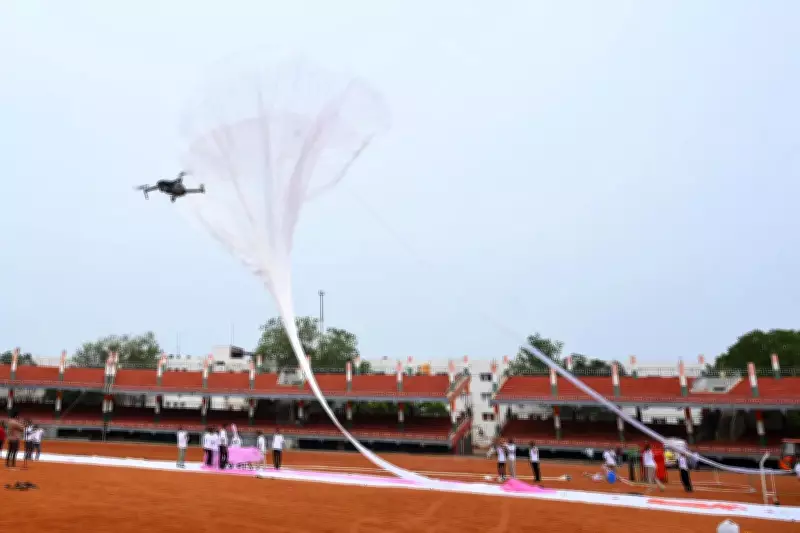
Vijayawada: Andhra Pradesh-based Raudranex Space Technologies Pvt Ltd successfully validated its Mission STRATO-X1 aboard India's first super-pressure balloon platform on Wednesday, marking a significant milestone in indigenous near-space and aerospace technology development. The mission was launched in Vijayawada using Red Balloon Aerospace's stratospheric balloon platform VISTA, which is designed to support sustained high-altitude flight conditions for experimental payload operations and near-space validation.
Mission Objectives and Payload
STRATO-X1 was designed as a technology demonstration and flight validation mission aimed at testing payload integration, onboard operations, environmental performance, and collecting flight data to support future development. The mission targeted operations in near-space at an altitude of approximately 25 kilometers, where lower atmospheric density and environmental conditions provide a relevant testing ground for advanced aerospace systems.
A key payload aboard the mission was REPS Mk-I, an experimental platform exploring air-breathing cold plasma propulsion concepts. Unlike conventional propulsion systems that rely on stored fuel and oxidizer to generate thrust, this concept seeks to utilize atmospheric particles at high altitude and energize them into plasma conditions.

Initial Observations and Analysis
Prakash Navdeep, co-founder and CEO of Raudranex Space Technologies, stated that initial observations indicate the payload completed its planned flight profile and operated in accordance with mission objectives. Detailed post-flight analysis is currently underway. He emphasized that STRATO-X1 should be viewed as a technology pathfinder and operational validation mission rather than a full propulsion performance qualification campaign. "The mission served as a concept and operational validation step intended to assess system readiness and gather mission data," he explained.
Development and Challenges
The propulsion concept, payload architecture, mission integration strategy, and experimental objectives were developed by Raudranex, which operates from Andhra Pradesh with a multidisciplinary team covering propulsion, aerospace systems, design, testing, and mission operations. Navdeep noted that STRATO-X1 took nearly eight months to move from concept to launch readiness, with major challenges including engineering validation under resource constraints, flight integration and testing cycles, mission logistics, regulatory preparedness, and building reliable aerospace hardware within startup timelines.
Selection of Vijayawada
Vijayawada was selected based on operational feasibility, logistics, regional ecosystem support, and mission planning requirements, reflecting the team's belief that advanced aerospace innovation can emerge from regional centers. For the Raudranex team, the mission represented more than a technical exercise. "The defining moment was seeing the payload transition from months of design, assembly, and testing into actual flight operations and receiving confirmation that onboard systems remained operational during ascent," Navdeep said. "It marked the transformation of an idea into a demonstrated mission."