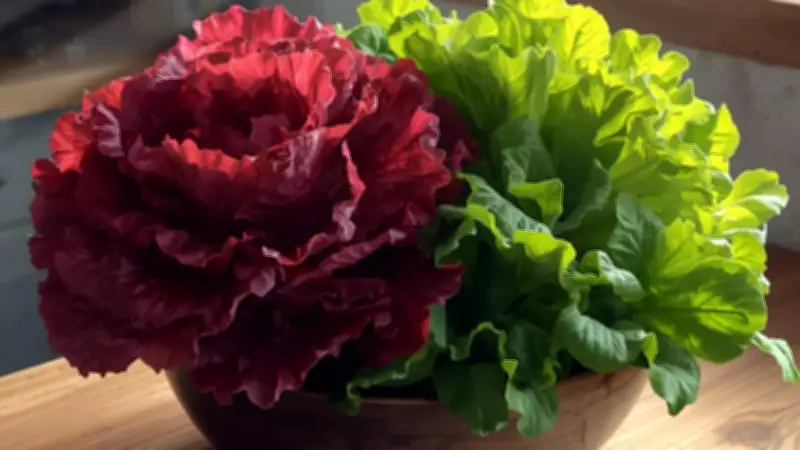
Have you ever wondered how vegetables get their unique colors and what happens when that color is changed in a laboratory? Recently, scientists did something similar by tweaking the red leaves of red lettuce to green through DNA experimentation, and the results surprised everyone. Here is more about this unique experiment and how it could impact our love for humble lettuce.
The Color-Transforming Experiment
The distinct red color of red leaf lettuce comes from anthocyanins, a group of polyphenol pigments known for their powerful antioxidant properties. Plants naturally produce these anthocyanins through a chain of enzyme-driven reactions that begin with an amino acid called phenylalanine. Along this biological pathway, the process generates a variety of flavonoids—a broad category of plant compounds that handle many tasks before some are eventually converted into the final red pigments.
All About the Study
According to a report published in the journal ScienceDaily, researchers used genome editing to turn off the gene responsible for producing an enzyme called dihydroflavonol 4-reductase. This specific enzyme controls a critical step just before anthocyanins form in red lettuce. Once the scientists disabled this gene, the plants could no longer create their characteristic red color, causing them to turn green instead.

The Chemical Pivot
When the research team examined the green lettuce they grew, they found something interesting. The amounts of beneficial compounds like flavonoids had increased, including a substance called quercetin, which helps prevent illness. This finding shows that stopping the plant from making red color acted like a barrier. It changed the way the green lettuce worked internally with its chemicals, so the green lettuce produced more of these beneficial flavonoids. Instead of completing the path to anthocyanins, the plant accumulated these other valuable compounds earlier in the cycle.
Big Chemical Changes
One might think that altering a plant's genes so drastically would harm it, but the modified lettuce showed no meaningful issues with its growth. The plant continued producing as usual, even though its color and chemical makeup changed significantly. This demonstrates that scientists can alter the balance of compounds in lettuce without hurting the plant. They can make the lettuce store nutrients instead of red pigments. The lettuce remains the same size and is just as healthy as before. This is a success for both the scientists and the lettuce.
Future of Indoor Farming
The researchers have not directly compared these edited plants to standard green lettuce varieties yet, but red lettuce is already famous for its naturally high production of healthy polyphenols. Because of this, the new method offers a highly promising way to design custom lettuce varieties packed with tailored nutritional benefits. The team also noted that a plant's ability to produce flavonoids is incredibly sensitive to its environment, especially factors like light intensity and temperature. Since modern indoor plant factories allow growers to perfectly control these conditions, these findings could soon help farmers grow specialized, hyper-nutritious lettuce optimized specifically for indoor cultivation systems.