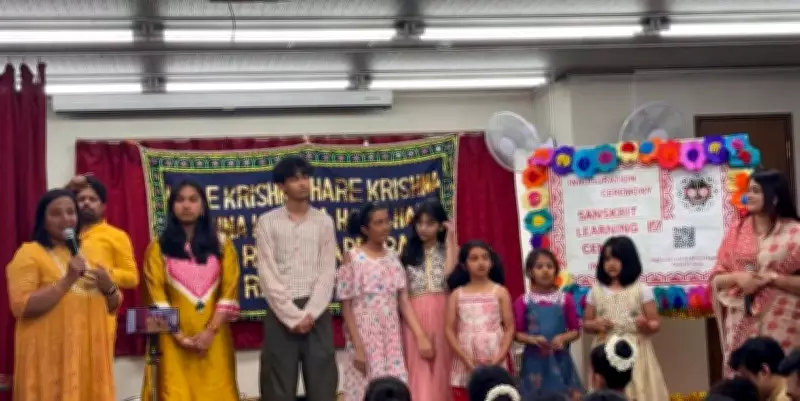
Bhubaneswar: To remain connected to their roots, members of Shree Jagannath Society Japan (SJSJ) recently inaugurated an Online Sanskrit Learning Centre in Japan to promote spoken Sanskrit learning. This initiative was launched in collaboration with Hindu Swayam Sevak Sangha Japan and World Sanskrit Study and Research Centre (WSSRC).
Course Details
The centre will offer a six-month online spoken Sanskrit course for beginners, held twice a week. Classes for children are scheduled on Wednesdays from 7 pm to 7:45 pm Japan Standard Time (JST), while adults will attend on Sundays from 7 pm to 7:45 pm JST. So far, eight people have enrolled in the program.
“Sanskrit can help NRIs stay connected to their culture, traditions and faith. Also, language and culture help preserve our identity and inner connection,” said Gyanindra Mishra, a member of SJSJ.

Collaboration and Curriculum Design
The initiative was under consideration for several years, during which the SJSJ explored collaboration with organisations such as Sanskrit Bharati, NCERT, and more recently Central Sanskrit University. Eventually, they partnered with Prof Dambarudhar Pati, associated with Hindi and Sanskrit at the University of Fiji and former second secretary at the High Commission of India, Suva, to design the course. Pati will conduct the classes.
“We were introduced to Dr Pati and his World Sanskrit Study and Research Centre (WSSRC) initiative, which provided a structured pathway for faculty and content support. Central Sanskrit University, New Delhi, continues to guide and support us,” said Mishra.
Benefits for Participants
SJSJ members said the course will provide a foundational understanding of Sanskrit. It will enable participants to comprehend the meaning and significance of the ‘shlokas’ that they chant during different devotional and cultural programmes organised throughout the year in Japan, thus enriching both individual learning and collective spiritual experience.
“Learning Sanskrit will help me chant the shlokas better during our functions,” said 11-year-old Shreya.
The members expect both children and adults to pronounce Sanskrit more accurately and naturally develop a deeper interest in our spiritual and cultural traditions. It can help participants connect more meaningfully with ‘shlokas’, bhajans, the Bhagawad Gita and Vedas while improving concentration, discipline and appreciation for Indian heritage.
For adults, learning Sanskrit will be a new experience. “I always wanted to learn Sanskrit but never got the opportunity. Now that I have it, I have enrolled for the course,” said Lopamudra Thatoi, who works as a vice-president with Citi Bank, Tokyo.
Also, the learning will keep children away from cellphone addiction. “If we don’t positively engage children in meaningful learning, much of their time may simply get absorbed into the smartphone world. For adults as well, this becomes an opportunity to learn something enriching for personal wisdom, self-growth, and inner satisfaction,” said Mishra.
The SJSJ is shortlisting professors from India to conduct the classes.