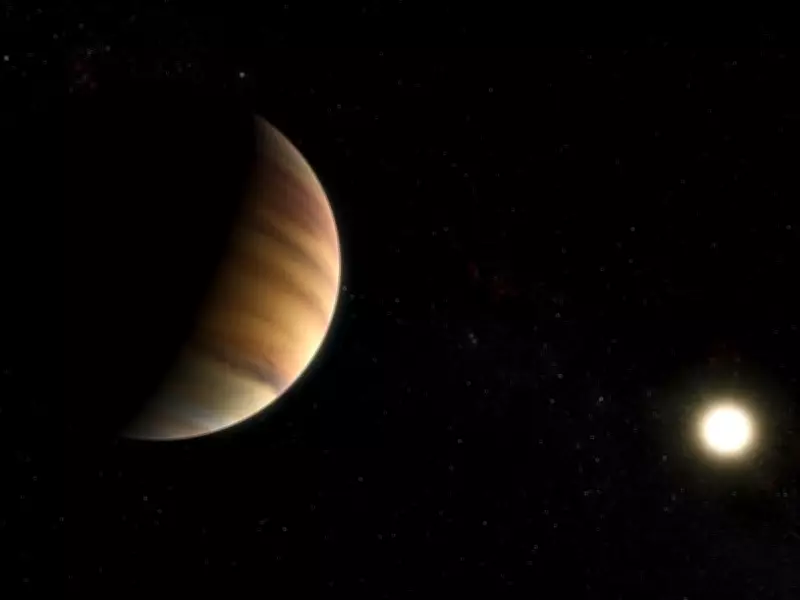
In 1995, astronomy underwent a dramatic transformation when scientists discovered a planet orbiting a Sun-like star. That year, astronomers found a planet orbiting a Sun-like star known as 51 Pegasi, located an estimated 50 light-years from Earth. The planet, named 51 Pegasi b, was an extraordinary find. It was a gigantic planet that completed an orbit around its star every 4.2 days.
Challenging the Planetary Model
Until this discovery, astronomers had largely used our solar system as the primary model for studying planetary systems. For years, scientists believed that gas giants had to orbit far from their parent stars due to intense heat. However, the discovery of 51 Pegasi b overturned this notion, revealing that nature could create alternative ways of structuring planetary systems, including massive planets situated very close to their parent stars.
The finding forced scientists to rethink long-held assumptions. As described by the European Space Agency, 51 Pegasi b is about half as massive as Jupiter but orbits its star much closer than Mercury orbits the Sun. Explaining such a phenomenon was no easy task for scientists at the time. Scientists realized that planets could exist in forms unlike those in our solar system. In other words, the Solar System would no longer be the sole model for understanding planetary systems.

The Radial Velocity Technique
This discovery was made using the radial velocity technique, also known as the wobble technique. According to information from NASA's Universe Exploration website, no visual sighting of the planet was made. Instead, astronomers relied on slight wobbles in the star's movements induced by the planet's gravitational force. This technique became crucial for finding many planets and is now one of astronomy's most important methods. The radial velocity method detects variations in the velocity of the central star due to the changing direction of gravitational pull from an unseen exoplanet as it orbits the star.
Discovery of the Hot Jupiters
The European team announced 51 Pegasi b in October 1995, and astronomers at Lick Observatory verified it a week later. Such rapid verification contributed to the reception of this sensational discovery as a breakthrough. This discovery helped establish the category of planets now known as hot Jupiters. These are gas giants that orbit very close to their stars and experience intense radiation and heat. The discovery of hot Jupiters suggested that planetary formation and migration theories needed major revision.
New Era for Astronomy
The discovery depended on the star 51 Pegasi. Because it is a Sun-like star, the discovery invited comparisons with our own solar system. If a planet such as this could be found circling a Sun-like star, it meant that the cosmos was much more varied than initially thought. The planet prompted a major shift in scientific thinking. As pointed out by the European Space Agency, it marked the actual birth of a whole new science field: exoplanets. It helped turn the search for exoplanets into a rapidly developing branch of science. It suggested that our solar system is only one of many possible planetary configurations.