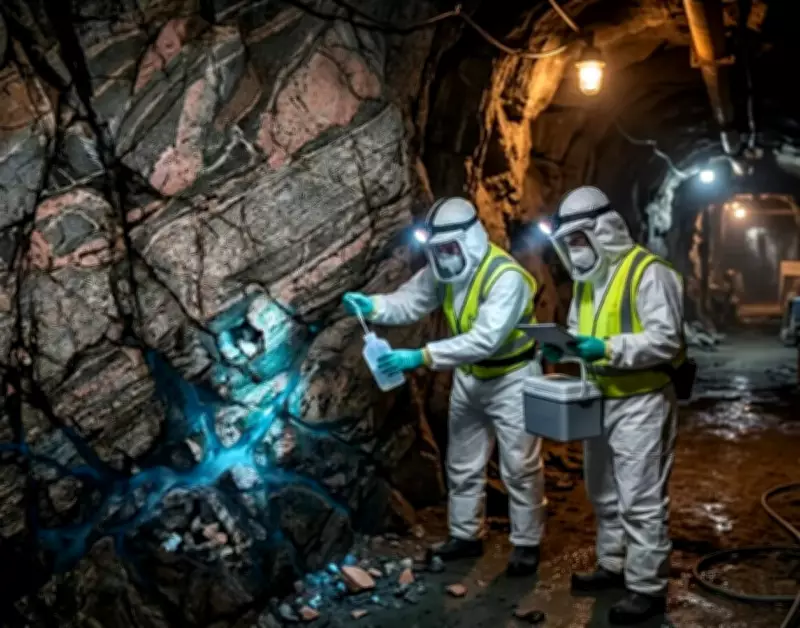
Scientists working in a Canadian mine have made a groundbreaking discovery that has revolutionized experts' understanding of life underground and our planet's history. The researchers found water trapped within fractures in ancient rocks at a depth of nearly 1.5 miles beneath the surface. According to chemical analysis, some of this water might be older than 1.5 billion years, and perhaps even 2 billion years. This makes the water as old as multicellular life forms, forests, and many other familiar features of our world.
The Discovery at Kidd Creek Mine
The finding was made at the Kidd Creek Mine in Ontario, Canada, which is among the deepest base-metal mines globally. According to a 2013 paper published in Nature, the scientists focused on analyzing fluids flowing in the cracks of ancient rocks, rather than searching for fossils or frozen ice crystals. This approach led to an unexpected revelation.
Why It Shocked the Scientific Community
When people think about ancient water, they often imagine glacier ice or enclosed lakes buried underground for millennia. However, the Kidd Creek case involved water that remained in its liquid state under chemical stress conditions deep underground. The water was located using mine tunnels dug deep into the crust, specifically in cracks of ancient crystalline rock beneath the Canadian Shield. These underground environments are extremely stable. While surface systems are constantly replenished by precipitation and river flows, fluid in fractures can remain isolated for millions of years. The researchers noted in the Nature study that this water is not simply old; it has been isolated from the atmosphere for geological timescales.

How Scientists Determined the Age of the Water
The age estimates did not involve any direct dating techniques but relied solely on geochemistry. Researchers examined noble gases dissolved in the underground fluids, including helium, neon, argon, and xenon. Based on the chemical fingerprints, the water was estimated to have remained sealed underground for hundreds of millions to billions of years. In another study conducted at the University of Toronto, scientists found that some fluid may be more than 2 billion years old, making it some of the oldest water ever extracted from the Earth. Additionally, a study supported by NASA found this discovery exciting as it could help scientists learn more about survival on other planets, such as Mars.
Why This Water Did Not Get Used Up
According to scientists, the key lies within the geology of the Canadian Shield. The water is stored in fractures in ancient rocks with very slow circulation. The fluids do not mix with surface groundwater but remain sealed underground while undergoing reactions with surrounding minerals. This leads to interesting chemistry: the waters become salty and contain gases formed due to reactions at great depths. Scientists believe this discovery helps understand the longevity of underground water sources over time.
Implications of the Discovery at Kidd Creek
The finding has completely altered the nature of debates around what is known as the deep biosphere, a term used to describe microbial ecosystems residing in depths beneath Earth's crust. Where water can remain below the surface for billions of years, microbes may also reside in isolated areas underground without depending on solar energy. This discovery is extremely significant for both astrobiology and planetary sciences. NASA scientists researching Mars and other terrestrial planets have been searching for underground areas where ancient water bodies could remain safe from harsh surface climates. This discovery provides a concrete example of such an environment. According to NASA scientists, chemical energy may be generated in such regions through interactions between water and rocks, making microbial life possible.

Earth's Ancient Water Trapped in Its Depths
Research is still ongoing regarding the Kidd Creek fluids due to uncertainties in the age and origins of the samples. Different samples may consist of water from various eras in Earth's history. Nevertheless, the scientific community agrees that these fluids are some of the oldest liquids ever found. The discovery is intriguing due to its unexpected nature: rather than finding fossils of ancient life forms trapped in rocks, scientists found traces of water flowing through cracks in rocks, dating back billions of years. This is what makes Kidd Creek unique, according to many experts. The discovery showed that some parts of Earth's crust could hide an underground system that functions even when surface conditions change entirely.