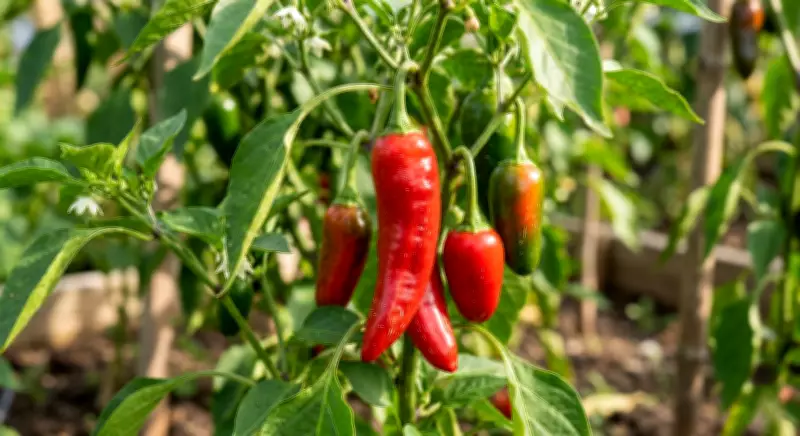
If you have recently taken up gardening, chances are peppers are on your grow list. They are forgiving, productive, and ideal for backyard raised beds or sunny balcony containers. However, many beginning gardeners overlook a critical factor: what you plant next to peppers can be as important as watering them.
Companion Planting: More Than a Trend
Companion planting is based on real plant biology. Some neighbors help peppers grow, while others harm them. Here are five plants to avoid planting near peppers, with scientific explanations.
Fennel: The Plant Bully
Fennel releases allelopathic chemicals that inhibit germination and growth of neighboring plants. A study on the allelopathic potential of fennel found that its extracts significantly hindered seedling growth. Peppers, being solanaceous, are especially sensitive to soil chemistry changes, leading to yellow leaves, stunted stems, and poor harvest. Keep fennel in a separate container, far from peppers.

Mint: The Aggressive Invader
Mint spreads aggressively via seeds and rhizomes, invading the shallow root zone of peppers. Peppers have roots only a foot or two deep, and mint competes fiercely for nutrients and water. Seedlings near mint struggle to survive. Experienced gardeners avoid planting mint directly in the ground; always use containers.
Other Nightshades: Disease Spreaders
Tomatoes, eggplants, and peppers belong to the same family and share vulnerabilities to pests and diseases. Planting them close together allows infections like tobacco mosaic virus to wipe out the entire group. There is no cure for this virus, so give each nightshade its own space and rotate crops annually.
Root Vegetables: Harvesting Hazards
Carrots, potatoes, and turnips seem harmless, but harvesting them requires digging that can damage peppers' shallow, wide-spreading roots. Such disturbance can be fatal to young plants. Keep root vegetables in a separate bed.
Brassicas: Wrong Crowd Attractors
Broccoli, kale, and cauliflower prefer cooler temperatures (below 70°F) and different soil pH than peppers. They also attract pests like flea beetles and cabbage worms, which damage pepper leaves. Additionally, brassicas release glucosinolates that have biocidal effects on soil microbes, disrupting the microbial community peppers rely on.
The Final Word
Companion planting is about creating an environment where plants thrive. The wrong neighbors can ruin an entire season. Plan ahead: give peppers space, keep fennel far away, and reserve brassicas for a cool-weather bed.