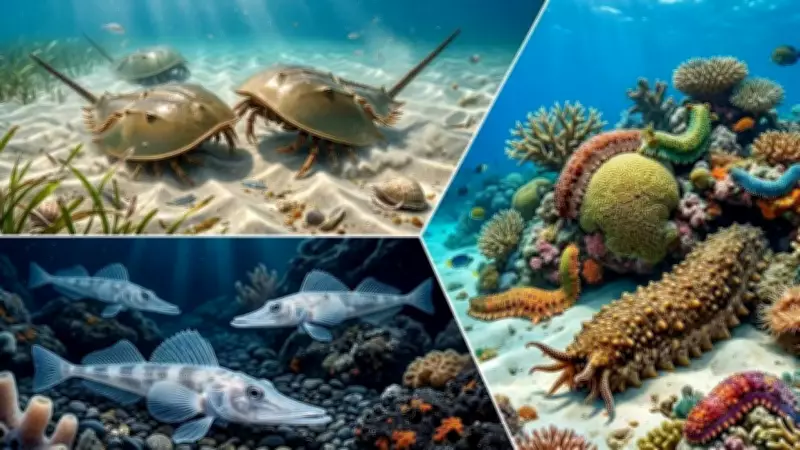
When we think of blood, we typically imagine a bright red liquid flowing through human veins. However, in the natural world, blood exhibits a remarkable diversity of colors and compositions across different species. Over millions of years, various animals have evolved physiological adaptations that allow them to produce blood not based on hemoglobin, the protein that gives most vertebrates their red hue. Instead, these creatures utilize alternative proteins and pigments to thrive in extreme environments.
Sea Cucumbers
Sea cucumbers, a type of echinoderm found in oceans worldwide, display a fascinating range of blood colors. While some species possess hemoglobin, others have differently colored fluids depending on their habitat and metabolic needs. Their unique physiology enables them to scavenge organic material on the ocean floor using specialized tube feet, adapting to life in deep-sea environments.
New Guinea's Green-blooded Skinks
These extraordinary lizards have evolved lime-green blood due to exceptionally high levels of the bile pigment biliverdin. Remarkably, they have developed tolerance to this pigment, which would be toxic to most other vertebrates. This adaptation helps them manage metabolic wastes without adverse effects, representing a stunning example of evolutionary innovation.

Crocodile Icefish
Inhabiting the frigid waters of Antarctica, the crocodile icefish is the first known vertebrate without functional hemoglobin or red blood cells. Instead, it extracts oxygen directly from the cold, oxygen-rich water into its plasma to support metabolic processes. This adaptation allows it to survive where other fish would struggle.
Octopuses
Octopuses use hemocyanin, a copper-based protein, to transport oxygen in their circulatory systems, giving their blood a distinctive blue color. Hemocyanin is more efficient than hemoglobin in cold, oxygen-poor deep-ocean environments, enabling octopuses to thrive where hemoglobin would be less effective.
Horseshoe Crabs
These ancient marine arthropods possess blue blood rich in copper-based hemocyanin. Their immune system relies on amoebocytes, which clump around bacteria to form a protective barrier, rather than white blood cells. This defense mechanism is crucial for their survival and has become vital for modern biomedical contamination testing.
Brachiopods
Brachiopods are marine invertebrates that transport oxygen using hemerythrin, an iron-containing respiratory pigment. Hemerythrin is colorless to pale yellow when deoxygenated but turns a distinct purple to pinkish color when bound to oxygen. This adaptation supports their life in marine environments.
These six animals exemplify the incredible diversity of life on Earth, showing that blood can come in many colors—from green and blue to clear and pink—each a testament to the power of evolution.