

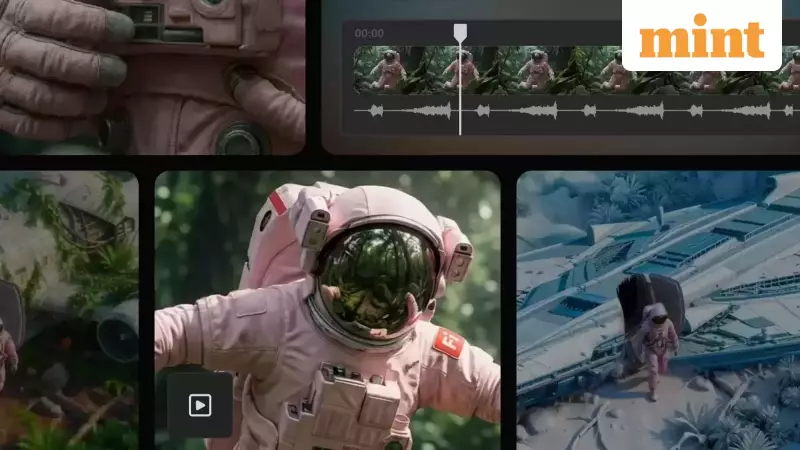
Adobe has officially launched its Firefly AI video generation tool for all users, marking a significant upgrade from its private beta phase that began in October. The public rollout introduces groundbreaking features designed to give creators unprecedented control over their video content through simple text commands.
Precision Editing with Simple Text Prompts
A major frustration with AI-generated videos has been the need to regenerate an entire clip to fix minor flaws, often losing desirable elements in the process. Adobe Firefly directly addresses this with its new Prompt to Edit feature. This allows editors to make surgical changes to specific parts of a video without starting from scratch.
As explained in a company blog post, users can now generate a video and then make precision refinements using text prompts powered by Runway's Aleph model. Editors can issue commands such as "Remove the person on the left side of the frame," "Replace the background with a clean studio backdrop," or "Change the sky to overcast and lower the contrast." Firefly executes these edits on the existing clip, preserving the overall structure.

Furthermore, the update grants users enhanced control over cinematic camera movements. Creators can upload a starting frame image along with a reference video to define the exact camera motion they wish to replicate. "Together, Prompt to Edit and camera motion reference can save you hours of trial and error, let you preserve your 'one great take' and give you more ways to apply your creative style to every shot," Adobe stated.
Expanding Creative Horizons with Third-Party AI Models
In a move to broaden its capabilities, Adobe has integrated support for third-party AI models within the Firefly video editor. The initial integrations include Black Forest Labs' FLUX.2 and Topaz Astra.
The Topaz Astra model, available within Firefly Boards, specializes in upscaling low-resolution footage. This feature is particularly useful for revitalizing archival brand material or personal clips, making them sharp and suitable for modern platforms like YouTube. Adobe highlighted the efficiency of this process, noting that users can queue multiple videos for upscaling in Boards while simultaneously working on other creative tasks, thereby maintaining workflow continuity.
Implications for Creators and the Editing Landscape
The public availability of Adobe Firefly with these advanced features represents a paradigm shift in video editing. It significantly lowers the technical barrier for high-quality video production, empowering a wider range of creators, from professionals to enthusiasts. The ability to make precise, text-driven edits and leverage specialized third-party models for tasks like upscaling streamlines the creative process.
Users can continue refining their projects within the Firefly video editor or seamlessly export to Premiere Pro for desktop finishing. The integration of sound effects and music tracks further rounds out the toolset, positioning Firefly as a comprehensive, AI-powered hub for video creation and refinement. This launch, dated 16 December 2025, solidifies Adobe's commitment to embedding generative AI deeply into the creative workflow.






