IIT Madras Startup Agnikul Cosmos Aims to Launch AI Data Centers in Space
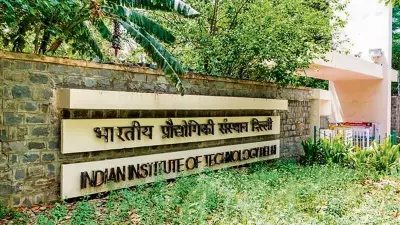
In a bold move that aligns with the intensifying global competition to build advanced infrastructure for artificial intelligence, Agnikul Cosmos, a space-tech startup incubated at IIT Madras, has announced its entry into the race to host data centers in space. The company is collaborating with AI cloud infrastructure startup NeevCloud to demonstrate these capabilities by deploying a cloud platform in low-earth orbit, specifically designed to enable AI inference processes.
Proven Technology and Strategic Partnerships
Speaking to the media, Moin SPM, co-founder of Agnikul Cosmos, revealed that the company plans to showcase its innovative approach during an upcoming orbital space flight. He emphasized that Agnikul's existing patented reusable technology can host data centers with only incremental research and development efforts. "While many in the industry discard the payload after use, we have ingeniously converted the upper stage of our rockets into a satellite bus," the company stated. "This allows us to provide infrastructure support similar to other payloads, and most of our technology is already proven. Our primary focus is ensuring that our assets perform reliably in the harsh environment of space."
Under this collaboration, Agnikul will be responsible for providing the essential space infrastructure, including solar energy solutions to power the data centers. Meanwhile, its partners, such as NeevCloud, will handle the computing and processing aspects. The founder noted that the concept was initially developed in 2019, and the company has since secured a patent for this groundbreaking technology.

Global Market Maturity and Future Scaling
The timing of this initiative is particularly strategic, as the market for orbital data center infrastructure has matured significantly. With major global players like Sam Altman and Elon Musk now directing their attention toward space-based data solutions, Agnikul sees a ripe opportunity for innovation. The collaboration aims to build an orbital data center network using constellations, which will scale efficiently as the number of launches increases over time.
Agnikul Cosmos, which has successfully raised $17 million in funding, is also planning to launch an orbital mission utilizing its reusable propulsion systems. This move positions the startup alongside other industry giants experimenting with space-based data centers, such as StarCloud, SpaceX, and Google, highlighting a growing trend toward extraterrestrial computing infrastructure.
This development underscores the rapid evolution of space technology and its convergence with artificial intelligence, promising to revolutionize how data is processed and stored in the future.